Pet Food Storage for Pest Prevention: Seal, Portion, Clean, and Monitor
On this page
Quick answer
Store dry pet food and treats in a thick plastic, metal, or glass container with a tight-fitting lid, clean spills promptly, and put uneaten food away after the pet's normal feeding period. Keep the original product name, lot code, expiration information, and feeding directions available. Inspect the storage and feeding area for gnawing, droppings, insects, webbing, damaged packaging, and moisture.
Do not place pesticide in, on, or next to pet food unless the product label specifically permits that use. Keep all pest-control products and devices inaccessible to pets and children.
Kane Exterminating Corp.
RonkonkomaSuffolk CountyNew York
10 Drew Ct Suite 3, Ronkonkoma, NY 11779, USA
Choose a practical sealed container
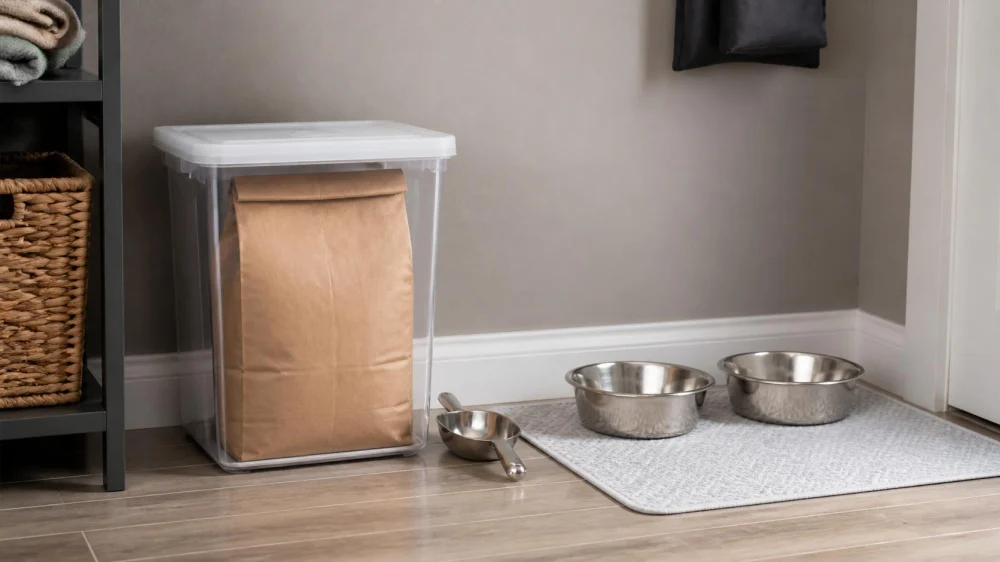
A useful container closes fully, resists chewing, stays stable when opened, and can be cleaned and dried. Match its volume to the bag rather than forcing food into an overfilled bin. Store it off a damp floor and away from heat, direct sun, and plumbing leaks.
- Check the lid seal and hinge for gaps.
- Avoid cracked, warped, or poorly fitting bins.
- Use a dedicated scoop that stays clean and dry.
- Do not mix a new batch into old crumbs.
- Clean and dry the empty container before refilling.
Keep labels and lot details
The original package carries information needed for recalls, ingredient checks, storage, and product questions. If the entire bag fits safely inside the sealed container, that approach preserves the label and can reduce direct residue in the bin. Otherwise, save the relevant panel or photograph it clearly before transferring food.
Mark the container only with accurate current information and remove outdated labels between products.

Manage the feeding area
Measure food into the bowl rather than leaving the storage bin open. Sweep or wipe crumbs from walls, baseboards, mat edges, and under nearby furniture. Wash bowls and utensils according to veterinary and product guidance.
- Serve the pet's planned portion.
- Observe whether food is being carried away or scattered.
- Remove uneaten food after the appropriate feeding period.
- Clean crumbs and spills promptly.
- Close and return the storage container to its place.
Control moisture without restricting pets
Pests need water as well as food, but pets need reliable access to clean drinking water. Do not remove water a veterinarian says the pet needs. Instead, repair leaks, wipe splashes, clean bowl mats, and move the feeding station away from damp cabinets or appliance drip areas when practical.
Ask a veterinarian before changing a pet's feeding or water schedule.
Inspect for pest evidence
Check the lid, floor, wall junction, shelving, and package seams. Signs can include small holes, gnaw marks, scattered crumbs, droppings, shed skins, larvae, adult insects, webbing, unusual odor, or damaged insulation. Photograph the area from a safe distance and note dates and locations.
Do not handle droppings or contaminated material with bare hands or sweep rodent waste dry into the air.
Respond without contaminating food
If food or its package may be contaminated, isolate it from people and animals and contact the manufacturer, veterinarian, local health authority, or pest professional as appropriate. Follow official cleanup guidance for the pest evidence found.
Use prevention first: remove food access, address moisture, reduce clutter, and identify entry points. If a pesticide is considered, use only a product labeled for the site and pest, and follow every label direction.
Important limitations
This is general U.S. household pest-prevention guidance, not veterinary, toxicology, or pesticide-use advice. Pet dietary needs, local pests, building conditions, contamination, and product labels vary. Contact a veterinarian or poison-control service promptly if exposure or illness is suspected.
Evidence notes
EPA integrated pest management guidance emphasizes removing food, water, and shelter before relying on pesticides. CDC guidance specifically recommends tight food containers, prompt spill cleanup, and putting pet food away after use. The workflow here applies those principles while preserving product traceability.
FAQ
Can I pour kibble directly into a plastic bin?
You can if the bin is appropriate, but preserve the original label and clean and dry the container between batches.
Should pet food stay out all night?
CDC pest-prevention guidance recommends putting it away after use; ask a veterinarian about your pet's feeding needs.
What type of container deters rodents?
CDC recommends thick plastic, metal, or glass with a tight-fitting lid.
Should I remove my pet's water bowl?
Do not restrict needed water. Control leaks and splashes and follow veterinary guidance.
Can I spray pesticide near the food bin?
Only a product label can authorize a use site and method. Protect food, pets, and people and follow the label exactly.
Next steps
Inspect the current bag and bin, save the product details, clean crumbs, fix nearby moisture, and check the lid. Monitor the area and seek qualified help if pest evidence or contamination persists.



 Complete Pest Solutions4.0 (81 reviews)
 Contact Us - StrikeForce4.0 (10 reviews)
 Highland Eco Pest Control4.0 (434 reviews)
 Western Pest Services0.0 (0 reviews)
 Pest2Kill Exterminating Co Inc4.0 (8 reviews)
 EZ Bed Bug Exterminator Brooklyn5.0 (100 reviews)
 How to Treat Pest Infestations in Attic Insulation – Expert Removal and Prevention Guide
 How to Inspect Second-Hand Furniture for Pests: Expert Tips for a Pest-Free Home
 How to Inspect Crawl Spaces for Rodents
 How to Seal Entry Points in Foundation Cracks - A Complete Guide
 DIY vs Professional Pest Control: Which One Saves You Money?
 How to Use Non-Chemical Barriers for Pest Control: Natural Solutions for Your Home