
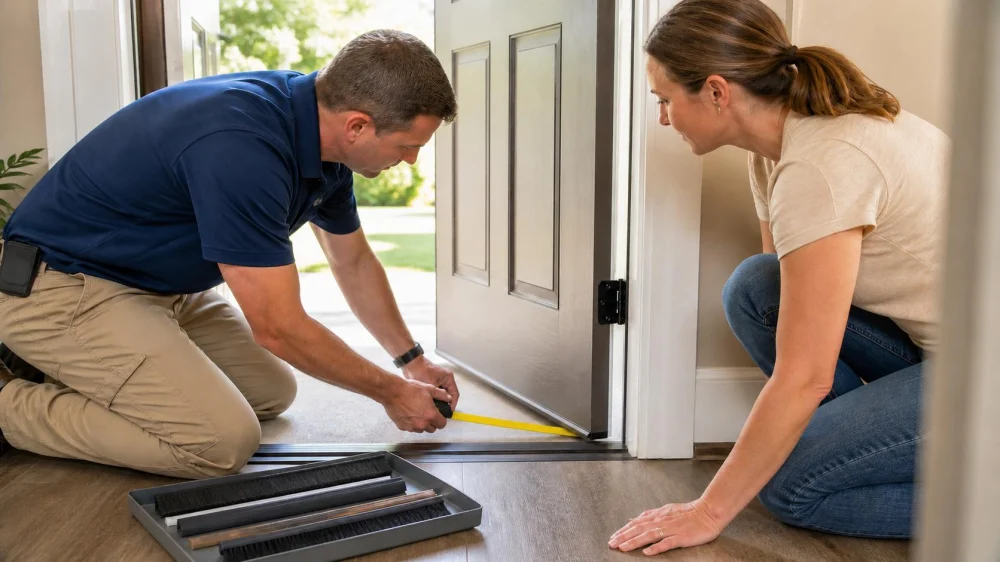
Pest-Proof Door Sweeps: Inspect Gaps, Fit, and Drainage
The gap beneath an exterior door can admit insects, spiders, and small rodents, but closing it is not simply a matter of adding the thickest strip available. A door sweep must work with the threshold, weather exposure, floor clearance, accessibility, drainage, fire and egress requirements, and the door’s movement. Inspect first, then choose a compatible repair.
Quick answer
With the door closed, inspect light, gaps, damaged weatherstripping, threshold movement, moisture, droppings, gnawing, and side or top openings. Measure at several points and observe the full swing. Choose a sweep approved for the door material, threshold, exterior exposure, and applicable codes. Install without blocking drainage, required ventilation, fire rating, accessibility, or emergency egress. Test the door from both sides and monitor for rubbing, water, and new pest evidence.

Complete Pest Solutions of Fayetteville N.C.
Hope MillsCumberland CountyNorth Carolina
4814 US-301 Unit 116, Hope Mills, NC 28348, USA
Inspect the entire opening
Look from inside during daylight without disabling locks or creating a security risk. Light under the door can reveal a gap, but also inspect the latch side, hinge side, top, threshold joints, frame-to-wall seal, adjacent siding, utility penetrations, and nearby foundation.
Record live pests, droppings, shed skins, wings, webbing, nesting, rub marks, gnawing, moisture stains, soft wood, corrosion, and damaged seals. Do not touch droppings, nests, insects, or unknown residue bare-handed.
Check whether the door is sagging, the hinges are loose, the slab is warped, or the threshold is damaged. A sweep cannot correct every structural or alignment problem.
Connelly Pest Control LLC
RoyersfordMontgomery CountyPennsylvania
17 Church Rd, Royersford, PA 19468, USA
Measure the gap and movement
Measure door width and the gap at the hinge side, center, and latch side on a clean floor. Note whether the threshold is level or adjustable. Repeat with normal seasonal flooring or mat conditions.
Open the door fully and watch clearance across rugs, tile transitions, slopes, and the exterior landing. A sweep that fits when closed can bind halfway through the swing.
Identify the door material and construction. Drilling into metal, fiberglass, wood, glass-containing, fire-rated, security, or historic doors can require different fasteners and may affect warranties or ratings.
Compare sweep and threshold types
Brush sweeps conform to uneven surfaces and may reduce insect gaps while allowing easier movement, but bristles can wear or collect debris. Rubber or vinyl fins create closer contact but can drag, tear, or stiffen with temperature.
Door shoes wrap the bottom edge and can provide durable weather protection, though installation is more involved. Automatic drop seals lower when the door closes and retract during movement, which can suit some smooth openings.
A threshold insert or adjustment may be part of the solution. Use compatible components rather than stacking several improvised products that prevent latching or trap water.
Plan installation safely
Follow the door, sweep, and threshold manufacturers’ instructions. Before drilling, check for glass, internal reinforcement, wiring, concealed hardware, and the effect on a fire or security rating. Use a qualified door professional when uncertain.
Remove only the failed material needed for the repair. Clean and dry the surface. Cut components with appropriate tools, eye protection, secure support, and hands away from blades. Do not cut while a piece is loosely held against the installed door.
Fasten the sweep straight and at the specified contact pressure. Overcompression increases friction and can bend the door, loosen screws, or leave the latch partly engaged.
Preserve drainage and ventilation
Exterior thresholds and sill pans may direct rain outward through designed paths. Sealant or sweep placement must not dam water against the door, cover weep openings, or channel moisture into the wall or floor.
Some buildings use intentional combustion-air, transfer-air, or ventilation openings. Do not seal a gap that serves equipment or code requirements. Fuel-burning appliances and attached garages need professional evaluation because air and carbon-monoxide risks can be serious.
Address roof, gutter, grading, sprinkler, and landing drainage that repeatedly wets the opening. A new sweep will not fix bulk water intrusion.
Test closing, latching, and access
After installation, open and close the door slowly several times from both sides. Confirm it reaches the frame without extra force, latches fully, deadbolt alignment remains correct, and the sweep does not fold or catch.
Test the complete emergency exit path. A person should not need unusual strength or a special maneuver. Maintain required threshold height, landing clearance, accessible route, and fire-door function.
Use a flashlight to inspect remaining gaps, but do not make the door airtight by force. Side and top seals may need separate compatible repairs.
Clean and monitor the repair
Vacuum or wipe the sweep as its manufacturer directs. Remove leaves, grit, ice, and hair that hold it open or abrade surfaces. Keep the threshold dry and clear.
Inspect after storms, temperature changes, building movement, and heavy use. Look for loose screws, torn fins, flattened bristles, scrape marks, water stains, and renewed pest evidence.
Combine exclusion with food and moisture control. Store food and pet supplies securely, repair leaks, manage trash, and reduce hiding places. If pests remain, seek proper identification and a targeted integrated pest-management plan.
Frequently asked questions
Should a sweep touch the floor?
It should contact or clear the threshold as its design specifies without preventing smooth operation and latching.
Can I seal every visible gap?
No. Preserve drainage, ventilation, fire, accessibility, and egress functions. Investigate why the gap exists.
Will a door sweep stop mice?
It can close one entry route, but material durability, remaining gaps, gnawing, and other openings require inspection.
Why does the new sweep drag?
It may be too low, overcompressed, misaligned, incompatible, or crossing an uneven floor. Adjust according to instructions.
Next steps
Photograph the closed-door gaps and threshold, measure at three points, and inspect the full swing and surrounding frame. Verify door type and code constraints, select a compatible sweep, install it to instructions, and test opening, closing, latching, drainage, and emergency use from both sides.




 M&H Pest Control Detroit4.0 (53 reviews)
 Blue Sky Mosquito & Pest Control3.0 (3 reviews)
 Squared Away Pest Control5.0 (24 reviews)
 GreenSafe Exterminators5.0 (3 reviews)
 In-Control Pest & Termite Services5.0 (7 reviews)
 Brody Brothers Pest Control in Harford County4.0 (348 reviews)
 Safe Pest Control Around Food Storage Areas – Tips for Effective and Safe Solutions
 How to Keep Pests Out of Outbuildings
 How to Deal With Pest Infestations in Wall Voids Effectively
 How to Keep Crickets Out of Your Home
 How to Keep Crawlspaces Dry and Pest-Resistant for a Healthy Home
 How to Safely Relocate Wildlife (Skunks, Opossums, Birds): A Comprehensive Guide