
Window Screen Pest Check: Mesh, Frames, and Drainage Gaps
On this page
Quick answer
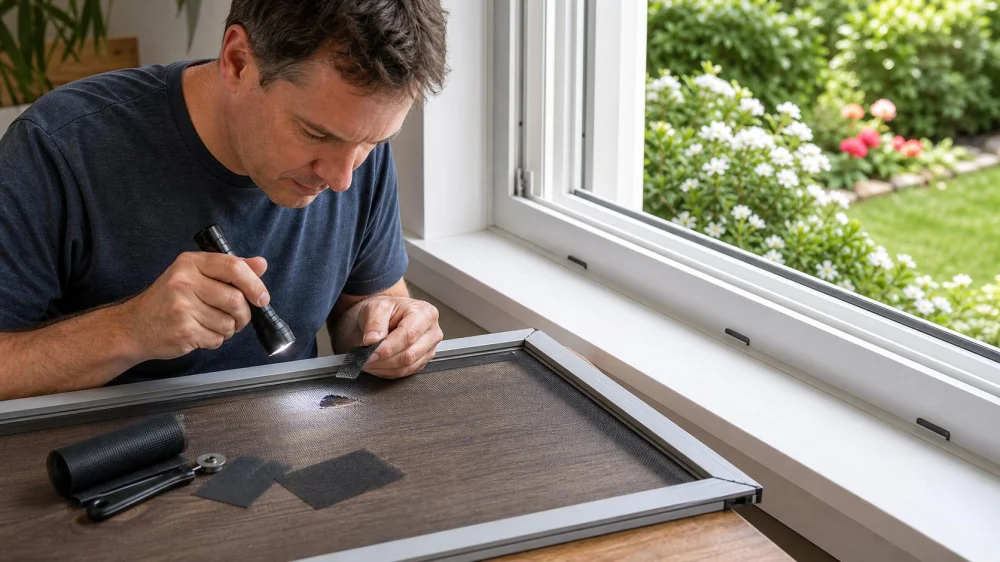
Close each window and inspect the screen mesh, spline or attachment edge, frame corners, tracks, sash contact, locks, and nearby wall joints. Repair small mesh damage with a compatible screen patch when appropriate; replace loose, brittle, warped, or extensively torn screens. Keep the window able to close and latch fully.
Do not fill every visible opening. Some window holes and channels are designed to drain water or ventilate the assembly. Check the manufacturer instructions before covering weep holes, vents, or moving tracks. Pest exclusion should preserve fire egress, airflow, drainage, warranties, and safe operation.

Inspect from inside and outside
Choose daylight and a safe, dry work period. From indoors, close and lock the window, turn off nearby fans, and look for light around the sash, frame, and screen edge. From outdoors, inspect only from stable ground or an appropriate platform; do not lean out an upper-story window or use an unsafe ladder.
Record the room, window type, damage location, and approximate size. Photograph the entire window and a close view with a ruler beside—not inside—the damage. Note pest sightings, but do not identify a species solely from a blurry photo.
Check nearby clues: insect bodies on the sill, webbing, droppings, gnawing, plant contact, standing water, loose trim, cracked caulk, or gaps around utility penetrations. A damaged screen may be one route among several.

Check mesh holes and edge separation
Inspect the center of the mesh, all four edges, corners, and the area around pull tabs. Look for punctures, cuts, corrosion, stretched openings, pet claw damage, brittle fibers, and mesh pulled out of its spline or retaining channel.
Gently press the frame rather than the mesh. A screen can look intact while the entire edge lifts away from the frame. Check that the mesh stays tensioned without distorting the frame.
Match repair mesh to the opening and environmental needs. Standard insect screen may not exclude the smallest pests, while very fine mesh can reduce airflow and collect debris. Follow window and screen manufacturer specifications rather than adding layers that interfere with fit.
Inspect frames, tracks, and closures
A perfect screen does little if the window cannot close. Vacuum loose debris from tracks with the window manufacturer’s maintenance guidance, then inspect rollers, hinges, locks, weatherstripping, stops, and sash alignment.
Look for bent aluminum, cracked vinyl, rotted wood, separated corners, missing clips, and a frame that is too small for the opening. Check whether paint, screws, or an earlier repair prevents the screen from seating.
Do not force a warped sash or disable a lock to fit a screen. Structural rot, failed glass, water intrusion, loose exterior trim, or difficult operation calls for a qualified window professional, landlord, or property manager.
Protect designed drainage and ventilation
Many windows use tracks, weep openings, or internal channels to move rainwater outdoors. Blocking them with caulk, foam, tape, or dense debris can trap water and cause damage. Vent components may also be part of the intended assembly.
Find the window brand and model when possible and consult the maintenance manual. Clean drainage paths only with approved methods. If an opening appears large enough for pests, ask the manufacturer whether a compatible guard exists and whether it changes drainage, airflow, or warranty coverage.
Never block a required emergency-egress window or permanently fasten a screen in a way that prevents escape. Bedrooms, basements, and local building codes may have special requirements.
Repair or replace the right component
A small isolated tear in otherwise sound mesh may accept a purpose-made patch. Clean and dry the area, follow the patch instructions, avoid sharp exposed edges, and verify that the repair does not catch the sash.
Replace the mesh or screen assembly when damage is widespread, the material is brittle, several edges have pulled free, or patches would leave large weak areas. Measure width, height, frame thickness, corner type, mesh type, and hardware before ordering.
Seal non-moving cracks around trim only with a material suitable for the substrate, location, movement, and weather exposure. Do not inject foam into unknown wall cavities, electrical areas, or drainage paths. For rental housing, report the defect and obtain approval before modifying property.
Monitor after the repair
Open, close, latch, and remove the screen as designed. Confirm smooth operation, full contact, preserved drainage, and no sharp edges. Reinspect after wind-driven rain and after the first hot-cold weather cycle.
Use nonchemical monitoring such as dated sighting notes or a pest professional's recommended trap placed safely away from children and pets. Continued pests may come from doors, vents, pipe gaps, attached units, groceries, plants, or indoor breeding sources.
If evidence increases, identify the pest before choosing control. A licensed professional can inspect building-wide routes and moisture problems. Pesticide application without identification and source correction may add exposure without solving entry.
Frequently asked questions
Can insects enter through an intact screen?
Yes. They may pass through mesh larger than their bodies or use gaps around the frame, sash, drain path, wall, door, or another opening.
Should I caulk window weep holes?
No, not without manufacturer guidance. They may be designed to drain water, and blocking them can damage the assembly.
Is finer mesh always better?
No. Finer mesh can change airflow, visibility, debris buildup, and fit. Choose a compatible product for the target pest and window.
Can I spray pesticide on a screen?
Do not apply any pesticide unless the product label permits that exact use and you can follow every direction and precaution. Physical repair is the first step for a damaged screen.
Who should repair an upper-story exterior screen?
Use a qualified professional with safe access. Do not lean out, climb onto roofs, or improvise ladders.
Official sources and safety limits
The EPA's pest-prevention guidance specifically recommends repairing holes in door and window screens. EPA's resident resources emphasize denying pests food, water, shelter, and entry, then using any pesticide responsibly and according to its label.
This guide does not diagnose an infestation, identify structural damage, or override window instructions, lease terms, building codes, or pesticide labels. Seek professional help for hazardous access, severe damage, protected wildlife, stinging insects, or persistent unexplained activity.
Next steps
Walk room by room with a flashlight and take one photo of every screen, frame, and sill. Mark small patch, full screen replacement, frame repair, drainage question, or professional access. Fix the highest-confidence physical defects first, test operation, and recheck sightings for two weeks before adding another control step.




 Pesthampton4.0 (46 reviews)
 Houck Pest Control4.0 (69 reviews)
 Cumberland Service Exterminators, INC5.0 (1 reviews)
 Best Value Pest Control5.0 (5 reviews)
 Mosquito Shield of Nassau Long Island4.0 (311 reviews)
 Pest Proof Pest Management4.0 (624 reviews)
 How to Evaluate Pest Control Guarantees | PestControlHub
 How to Choose Pest Control Based on Region
 How Crowded Cities Affect Pest Populations
 How to Spot Pest Damage in Attic Insulation
 How to Control Fire Ants in Your Yard: Effective Solutions and Tips
 How to Keep Cockroaches From Reinfesting After Treatment