
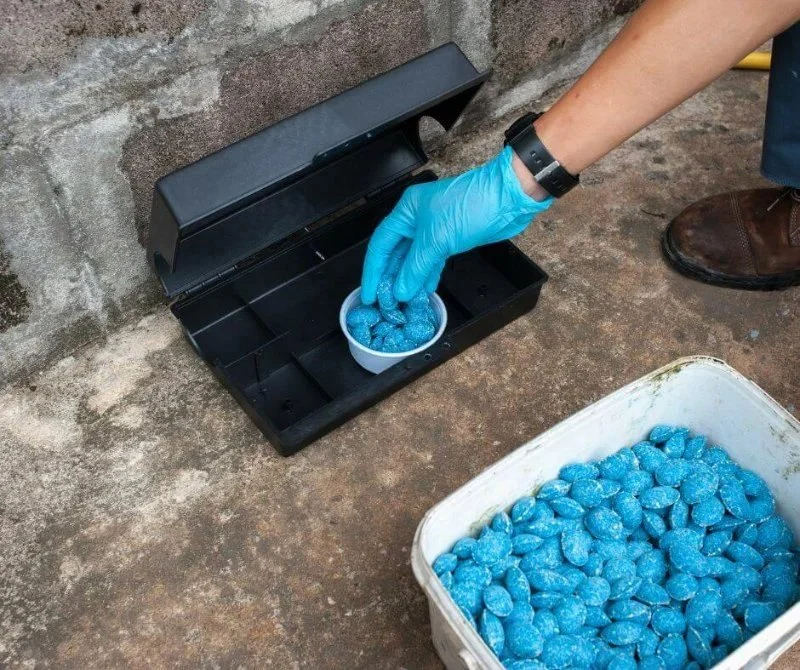
Building a Smarter Strategy for Rodent-Free Spaces
- understanding-bait-systems - how rodent bait stations actually work in real environments
- strategic-placement - where and how to position bait for maximum effectiveness
- long-term-control-methods - turning short-term fixes into lasting prevention
- real-case-insights - real homeowner experiences dealing with rodent infestations
- safety-and-maintenance - ensuring safe and consistent pest control results
Why Bait Systems Matter in Modern Rodent Control
Rodent problems rarely disappear on their own. In urban and suburban environments across the United States, mice and rats adapt quickly to food sources and shelter. This is where bait systems for rodents become a long-term solution rather than a temporary fix.
Unlike traps that only capture a few pests at a time, rodent bait stations are designed to interrupt the breeding cycle and reduce entire populations gradually. When used correctly, they create a controlled environment that discourages reinfestation.
United Termite
Manchester TownshipOcean CountyNew Jersey
3154 Quarry Rd, Manchester Township, NJ 08759, USA
How Rodent Bait Systems Actually Work
Attracting rodents with controlled bait placement
A bait system uses strategically formulated attractants that appeal to rodents’ natural feeding behavior. These bait blocks or gels are placed inside secure stations to prevent accidental contact with pets or children while still being accessible to rodents.

Slow-acting control for population management
One key feature of effective mouse bait strategy is delayed action. This ensures rodents return to their nesting areas before the bait takes full effect, allowing it to spread through colonies and increase overall effectiveness.
Continuous exposure instead of one-time capture
Unlike snap traps, bait systems provide continuous exposure. This is crucial for long-term rodent control because it targets both visible rodents and hidden nesting populations.
Best Practices for Strategic Placement of Bait Stations
Focus on travel routes, not open spaces
Rodents rarely move randomly. They follow walls, pipes, and hidden pathways. Placing rodent bait stations along these routes increases the chance of interaction significantly.
Identify food-source proximity
Kitchens, garages, basements, and storage areas are high-risk zones. Placing bait systems near these locations ensures rodents encounter control measures early in their movement cycle.
Avoid overexposure in open environments
One common mistake is placing bait in the middle of open areas. Rodents tend to avoid exposed spaces, so strategic placement is far more effective than quantity alone.
Real Case: A Restaurant Kitchen That Solved a Recurring Infestation
A small family-owned restaurant in Chicago struggled with repeated rat sightings in its storage area. Traditional traps provided temporary relief, but the problem kept returning every few weeks.
After switching to a structured bait systems for rodents approach, the management installed sealed bait stations along wall perimeters, behind appliances, and near utility entry points.
Within six weeks, sightings dropped dramatically. The key was consistency and placement discipline rather than aggressive one-time extermination. Staff also learned to avoid moving stations frequently, which helped maintain rodent behavior patterns under control.
Long-Term Rodent Control Strategy That Actually Works
Consistency is more important than intensity
Many homeowners assume stronger bait equals faster results. In reality, consistency in monitoring and replacement matters far more than aggressive application.
Monitoring and rotation of bait stations
Bait effectiveness decreases over time due to environmental exposure. Regular inspection ensures bait remains attractive and functional, especially in humid or outdoor conditions.
Combining bait systems with exclusion methods
Long-term rodent control is most effective when bait systems are paired with sealing entry points. Without exclusion, new rodents will continue to enter even after old populations are reduced.
Common Mistakes in Using Rodent Bait Systems
Placing bait without understanding rodent behavior
Random placement often leads to poor results. Understanding how rodents move is essential for success.
Ignoring secondary food sources
If alternative food sources like garbage or pet food remain accessible, rodents may ignore bait altogether.
Inconsistent maintenance schedules
A bait system is not a “set and forget” solution. Without proper maintenance, effectiveness declines quickly.
Safety Considerations for Home and Commercial Use
Modern bait stations are designed with safety in mind, but proper handling is still essential. Keeping stations locked and secured ensures that only rodents can access them.
For families with pets or small children, tamper-resistant stations provide an added layer of protection while maintaining effectiveness in pest prevention systems.
For homeowners and business operators looking to explore reliable tools and solutions, PestControlHub offers resources and products designed to support long-term rodent management strategies.
Why Integrated Pest Control Is the Future
Relying on a single method rarely solves rodent problems permanently. The most effective approach combines bait systems, environmental control, and structural maintenance.
As rodent behavior continues to adapt in urban environments, smarter pest control strategies will remain essential for maintaining safe, clean living and working spaces.


 Dodson Pest Control4.0 (301 reviews)
 Empire Exterminators5.0 (47 reviews)
 Orkin4.0 (1302 reviews)
 Do It Yourself Pest Control Store4.0 (274 reviews)
 ClearDefense Pest Control5.0 (2183 reviews)
 Emerald Tree & Shrub Care Company4.0 (11 reviews)
 How to Use Smart Technology for Rodent Control
 How to Certify a Pest-Free Home for Resale
 How Crowded Cities Affect Pest Populations
 How to Monitor Pest Conditions in Walls
 How to Control Pests in Crawl Spaces: Effective Methods for a Pest-Free Home
 Safe Pest Control Around Food Storage Areas – Tips for Effective and Safe Solutions