Pantry Moths vs Clothes Moths: Find the Real Source
On this page
Quick answer
Small moths near stored food usually point to a pantry source; moths or larvae in dark closets near wool, fur, feathers, or soiled natural fibers suggest clothes moths. The adult moth's location is only a clue because it can wander. Find larvae, webbing, cases, shed skins, or damaged material to confirm the source. Remove infested items, clean the storage area, and protect vulnerable goods in sealed containers.
Pantry moths are stored-product pests whose larvae feed in dry foods, while clothes moth larvae feed mainly on animal-based fibers and residues. Adult moths cause little or no feeding damage; control succeeds when the larval food source is found.
Allpro Pest Management Inc.
CharlestonCharleston CountySouth Carolina
2487 Ashley River Rd Suite 10, Charleston, SC 29414, USA
How pantry and clothes moth clues differ
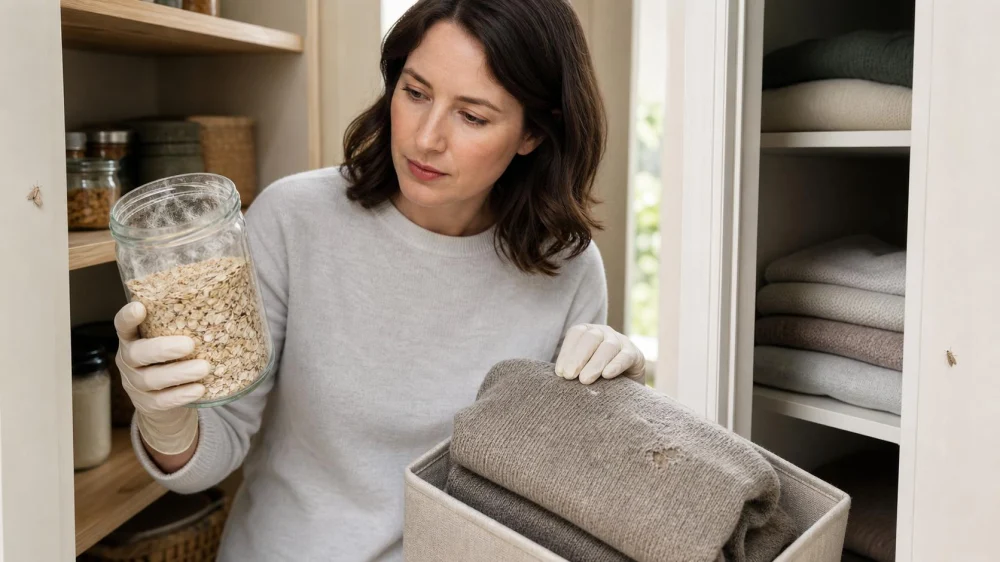
- Location: Pantry moth activity clusters around kitchens, food storage, pet food, birdseed, or decorative dried plants. Clothes moth activity centers on closets, rugs, upholstered furniture, stored textiles, or animal materials.
- Light behavior: Common pantry moth adults often fly openly and may appear on walls or ceilings. Clothes moth adults tend to avoid bright light and run or flutter in darker areas.
- Larval evidence: Pantry items may contain webbing, clumped particles, shed skins, or larvae. Textiles may show irregular holes, surface grazing, silken tubes, webbing, or portable cases.
- Food source: Pantry larvae can infest grains, flour, cereal, nuts, dried fruit, spices, chocolate, dry pet food, seed, and similar products. Clothes moth larvae favor wool, fur, feathers, hair, felt, and natural-fiber items contaminated with body oils or food.
Color and size alone are unreliable. Several stored-product moths and fabric pests occur in the United States, and carpet beetles can create textile damage that resembles clothes moth activity.
Crown Pest Control
MatthewsMecklenburg CountyNorth Carolina
10737 Independence Pointe Pkwy Ste 102, Matthews, NC 28105, USA
How to inspect a pantry
- Inspect opened and unopened packages, including folded seams and cardboard liners.
- Check rarely used foods, bulk goods, baking supplies, spices, tea, pet treats, birdseed, and dried decorations.
- Look above shelves and where walls meet ceilings; mature larvae may leave food to pupate.
- Discard clearly infested food in a sealed bag according to local waste rules.
- Vacuum crumbs and shelf edges, then empty the vacuum outdoors into sealed trash.
- Move unaffected dry foods into intact glass, metal, or sturdy plastic containers with tight lids.
Do not spray insecticide onto food, dishes, utensils, food-contact surfaces, or packages unless a product label explicitly permits that exact use. Removing the source is the central step.
How to inspect closets and textiles
- Start with undisturbed woolens, felt, fur, feather-filled items, rugs, stored blankets, and garments with food or perspiration residue.
- Examine seams, folds, cuffs, collars, rug edges, furniture undersides, baseboards, and dark corners.
- Look for live larvae, silk, cases, shed skins, and fresh grazing around holes rather than relying on the flying adult.
- Isolate suspect items in sealed bags until they can be cleaned or evaluated.
- Follow the care label. Professional dry cleaning, appropriate laundering, or another material-safe treatment may be needed.
- Vacuum storage areas and hidden lint, hair, and debris, then store clean vulnerable textiles in sealed containers.
For valuable rugs, historic textiles, fur, taxidermy, or items that cannot tolerate heat, washing, or freezing, consult a textile conservator or qualified pest professional before treatment.
A source-first cleanup checklist
- Identify whether food or fiber damage is present.
- Photograph and save a moth or larva in a sealed container for identification.
- Remove the confirmed source and inspect adjacent items.
- Vacuum cracks, shelf supports, corners, and undisturbed debris.
- Use sealed storage for cleaned goods.
- Monitor the correct area after cleanup and record new sightings.
Pheromone traps can help detect certain species and show whether adults remain, but the trap must match the pest. A trap is a monitoring tool, not a substitute for finding infested food or fabric.
Safety notes and limits
Mothballs and moth-repellent products are pesticides, not general air fresheners. Use them only for the sites, pests, containers, and materials stated on the label. Keep them away from children, pets, food, and occupied living spaces as directed. Never place extra product because more is not better.
The EPA recommends nonchemical controls where possible and requires pesticide labels to be followed. If an infestation continues after the source is removed, affects inaccessible areas, or involves valuable materials, ask a professional for identification and a written integrated pest management plan.
Evidence note: Source inspection and pantry cleanup guidance aligns with the University of Minnesota Extension's stored-food pest resource. Textile feeding patterns are supported by Penn State Extension's current clothes moth guide. Pesticide cautions reflect current EPA safety advice.
Frequently asked questions
Why are moths still flying after I threw out infested food?
Larvae may have left the package and pupated elsewhere before cleanup, so adults can continue to emerge for a time. Reinspect nearby products and cracks while monitoring the trend.
Do clothes moths eat cotton or synthetic fabric?
They mainly rely on animal-derived material such as wool, hair, fur, or feathers. Plant and synthetic textiles can be damaged when blended with animal fibers or contaminated with food, oils, or other suitable residues.
Can I solve the problem with cedar?
Cedar scent alone does not remove an active source. Clean and inspect items first, use sealed storage, and treat only with methods suitable for the material.
Should I throw away every package or garment?
No. Discard confirmed infested food and evaluate affected textiles by their care requirements and value. Inspect adjacent goods carefully and isolate uncertain items.
Next steps
Begin where larvae can eat, not where one adult happened to land. Inspect stored food and vulnerable textiles separately, preserve a sample, remove the source, clean hidden debris, and switch to sealed storage. If evidence appears in both areas or identification remains uncertain, arrange professional inspection before using pesticides.





 EcoFusion Pest Control4.0 (137 reviews)
 F&W Pest Control4.0 (486 reviews)
 Meerkat Pest Control4.0 (549 reviews)
 Tomlinson Bomberger Pest Control5.0 (68 reviews)
 Terminix4.0 (381 reviews)
 Kirkwood Pest Control- A Division of Viking Pest Control3.0 (27 reviews)
 How to Mitigate Pest Liability in Real Estate Deals
 Invisible Entry Points: How Pests Sneak Into Your House Explained
 How to Keep Termites from Entering Through the Foundation – Proven Protection Methods
 How to Evaluate Pest Return Risk Over Time: Key Factors and Tips
 How to Plan Pest Control After Flood Damage
 What Happens During a Professional Pest Control Visit