
Bed Bug Travel Plan: Inspect Rooms and Unpack Luggage
On this page
Quick answer
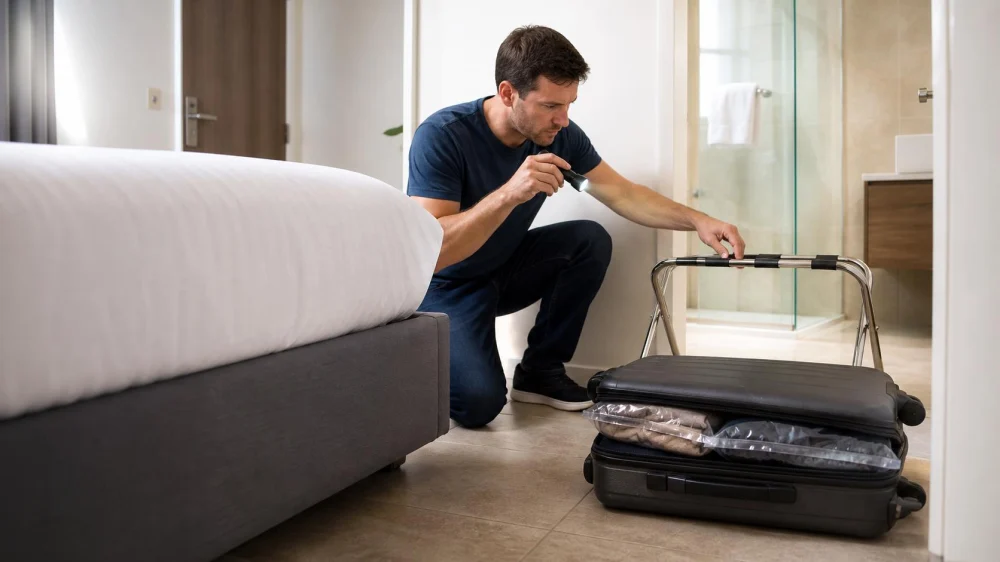
Before sleeping in temporary lodging, keep bags off the bed and floor while you inspect mattress seams, the headboard area, and the luggage rack with a flashlight. Store luggage closed and away from the bed. After travel, inspect the suitcase and move washable clothing directly to laundry. Dryer heat, not washing alone, is the key EPA-highlighted control step.

Pack for inspection
Bring a small flashlight, a few sealable bags for worn clothing, and a light-coloured laundry bag that makes insects easier to notice. Pack clothing in groups so you can handle it without spreading everything across the room. Avoid bringing cardboard boxes, which are harder to inspect and can provide hiding places.
A hard-sided suitcase can be easier to examine than a heavily pocketed fabric bag, but no luggage design is bed-bug proof. Learn the general appearance of adult bed bugs, young bugs, dark spotting, pale shed skins, and tiny eggs from a reliable reference. A photo cannot confirm every speck, so the goal is cautious screening, not certainty.

ClearDefense Pest Control
Winston-SalemForsyth CountyNorth Carolina
486 N Patterson Ave Suite 232, Winston-Salem, NC 27101, USA
Inspect on arrival
Place closed luggage in the bathroom or another hard-surfaced area away from sleeping furniture while you check the room. Use a flashlight along mattress seams and labels, the bed frame, nearby headboard cracks, and upholstered furniture close to the bed. Inspect the luggage rack before using it, including straps, joints, and screw holes.
Do not dismantle hotel furniture, spray products, or put yourself at risk moving a heavy mattress. A brief visual inspection reduces exposure opportunities but cannot prove that a room is clear. Bed bugs can hide in narrow crevices, and early infestations may leave little evidence.
Manage luggage during the stay
Keep the suitcase zipped or closed and elevated on an inspected rack away from the bed and wall. Do not place backpacks, coats, or worn clothing on upholstered chairs, the bed, or the floor. Put used clothes into a sealed bag rather than mixing them loosely with unworn items.
These steps create separation and simplify the return-home routine; they do not guarantee prevention. Bed bugs do not reflect cleanliness, and anyone can encounter them. Avoid panic-driven pesticide use. Never apply a pesticide to skin, clothing, bedding, or luggage unless the product label explicitly permits that exact use, and always follow the label.
Respond to suspicious signs
If you see an insect or suspicious spotting, photograph it without crushing or spreading material. If safe, contain a specimen in a sealed container for identification. Notify lodging management and ask for their response plan. Moving to the room next door or directly above or below may not create meaningful separation, so discuss placement rather than accepting any switch automatically.
Keep belongings closed while the issue is assessed. Do not carry loose clothing through hallways or place bags on another bed. Bites alone cannot identify bed bugs because skin reactions differ and many other causes look similar. A pest-management professional or qualified local resource can help confirm an insect.
Unpack after returning home
Keep luggage out of the bedroom. Unpack washable clothing directly into the washing machine or a contained laundry area. The U.S. Environmental Protection Agency notes that high-temperature dryer time kills bed bugs, while washing alone generally does not. Use settings that the fabric manufacturer permits; heat-sensitive belongings need a different professional or label-approved plan.
Inspect seams, pockets, zippers, wheels, and handles with a flashlight. Vacuuming may remove visible debris or insects; immediately seal and discard vacuum contents according to local guidance. Store the inspected suitcase away from sleeping areas, such as an appropriate garage or basement location, without creating moisture or storage hazards.
When to call a professional
Request a qualified pest inspection if you find a confirmed bed bug, repeated suspicious signs, or unexplained activity near sleeping areas. Ask how the company confirms identification, what rooms it inspects, which nonchemical and pesticide methods it proposes, how preparation and follow-up work, and what the written warranty covers.
For apartments, condominiums, dorms, or other shared housing, report through the required property channel promptly because nearby units may affect management. Do not move infested furniture through common spaces without instructions. Save photographs, dates, specimens, receipts, and written communications.
Frequently asked questions
Should I put my suitcase on the hotel bed?
No. Use an inspected luggage rack away from the bed and keep the bag closed. The bed and floor place luggage close to common hiding and travel routes.
Does washing clothes kill bed bugs?
Washing can remove some bugs, but EPA travel guidance emphasizes suitable high dryer heat. Follow garment care instructions and seek professional advice for items that cannot tolerate heat.
Should I throw away my luggage after one suspicious mark?
Not automatically. Isolate and inspect it first. Unnecessary disposal can spread items through the building and wastes property. Confirm the pest and choose a treatment compatible with the materials.
Sources and limitations
The U.S. Environmental Protection Agency’s bed bug tips for travel support room inspection, luggage-rack use, direct laundry handling, suitable dryer heat, and storing suitcases away from bedrooms. This checklist lowers opportunities for transport but cannot guarantee that a room or bag is pest-free.
Conclusion and next steps
Pack a flashlight and sealable laundry bags, inspect before settling in, keep luggage elevated and closed, and unpack through a contained laundry routine. If evidence appears, preserve it, limit movement, notify the responsible property, and seek reliable identification before choosing treatment.


 Nick's Pest Control LLC4.0 (14 reviews)
 Alta Pest Control4.0 (1207 reviews)
 Red Coat Pest Solutions4.0 (62 reviews)
 Essential Pest5.0 (12 reviews)
 Bug Off Pest Control4.0 (4 reviews)
 Bug Guy Pest Control5.0 (6 reviews)
 How to Use Smart Sensors for Insect Detection | Technology for Pest Control
 How to Seal Entry Points Around Piping: Effective Methods for Home Protection
 What Happens During a Professional Pest Control Visit
 How to Prevent Pest Return After Treatment: Effective Strategies
 Pantry Moths or Beetles? Inspect Stored Food Safely
 How to Prevent Pest Ingress Around Foundations