
Pantry Moths or Beetles? Inspect Stored Food Safely
On this page
Quick answer
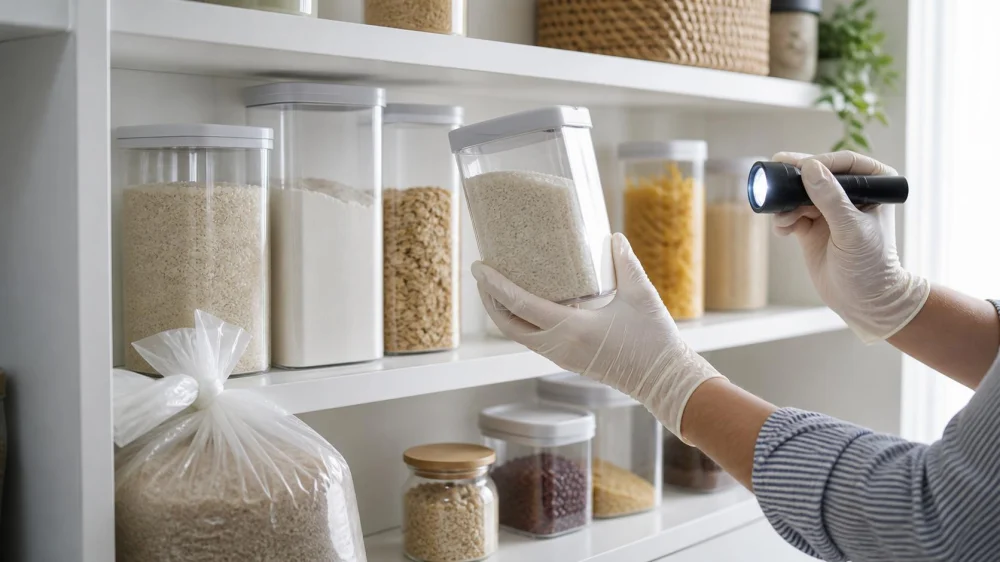
Empty one pantry section at a time and inspect every dry food package, including unopened paper and cardboard containers. Look for webbing, larvae, shed skins, small beetles, holes, clumped food, or insects near seams. Seal clearly affected items before carrying them out, vacuum cracks, wipe shelves, and move sound food into pest-resistant containers. Persistent activity after a complete inspection may require professional help.
This guide is for routine household inspection in the United States. It does not identify a species from a description or replace product labels, local waste rules, food-safety advice, or a licensed pest professional’s site-specific plan.

Moyer Pest Control
Lumberton TownshipBurlington CountyNew Jersey
68 Stacy Haines Rd Ste 106, Lumberton Township, NJ 08048, USA
Signs of stored food pests
Stored food pests are insects that develop in or feed on shelf-stable foods such as grains, flour, cereal, pasta, nuts, seeds, spices, dried fruit, baking mixes, pet food, or bird seed. Common groups include small beetles and pantry moths, but correct identification may require a clear specimen or expert examination.
Inspect for fine webbing in food or package corners, caterpillar-like larvae, shed skins, small round exit holes, powder around seams, food that has clumped unexpectedly, or live insects inside a package. Adult moths on walls can point toward a nearby source, while small beetles may wander beyond the pantry.
One insect near a window is not enough to identify an infestation. Record where it was found and check food sources before applying a treatment.

How to inspect the pantry
- Prepare the area. Keep children and pets away, clear a work surface, and gather a flashlight, sealable bags, a vacuum with a crevice tool, and clean containers.
- Work in sections. Remove items from one shelf so pests are not carried throughout the kitchen.
- Check package seams. Examine folds, lids, closures, cardboard liners, and the underside of containers. Some pests can enter thin or imperfect packaging.
- Inspect overlooked foods. Include spices, tea, chocolate, nuts, decorations made from seeds, pet treats, bird seed, and infrequently used baking ingredients.
- Look around the food. Check shelf-pin holes, cracks, wall-ceiling edges, drawer runners, and spilled material under liners or appliances.
- Separate findings. Keep suspected packages closed and away from items already checked.
Photograph a specimen without touching it if identification is uncertain. A clear close view beside a common object for scale can help a pest professional, extension service, or other qualified resource evaluate it.
Keep, isolate, or discard
Discard food with live insects, larvae, webbing, holes, or obvious contamination. Close the package, place it in a durable sealed bag or lidded container, and move it to the appropriate outdoor waste location promptly. Follow local disposal rules and avoid leaving the bag in another indoor room.
For nearby items with no visible signs, isolate them in clear, pest-resistant containers and monitor. Do not combine newly inspected food with older material until both are known to be sound. When a package’s safety is uncertain, follow food-safety guidance or discard it rather than tasting it.
Freezing or heating may be recommended for certain products in some guidance, but temperature, duration, package size, and food quality matter. Use an authoritative method appropriate to the specific food rather than improvising.
Clean shelves without spreading pests
Vacuum loose food, webbing, and insects from shelves, corners, cracks, shelf-pin holes, and hardware. Empty the vacuum outdoors into a sealed waste bag, or discard the collection bag as directed by the vacuum manufacturer. Then wash food-contact shelves with an appropriate household cleaning method and let them dry completely.
Cleaning removes food residue and accessible life stages; it does not guarantee that every hidden insect is gone. Avoid flooding particleboard, unsealed wood, electrical areas, or wall gaps with liquid.
Do not spray a general-purpose pesticide on food, dishes, utensils, or food-contact surfaces. If a pesticide product is considered, the label must specifically permit the site and application. The label controls where, how, and whether it may be used; more product is not better.
Prevent another infestation
- Buy quantities of dry goods that can be used while still fresh.
- Inspect vulnerable packages before placing them in the pantry.
- Store grains, flour, cereals, nuts, seeds, and pet foods in tight-fitting pest-resistant containers.
- Label containers with the product and date without mixing new food into old residue.
- Clean spills promptly, including beneath shelf liners and small appliances.
- Rotate stock so older items are used first.
- Monitor the pantry for several weeks after cleanup and record where activity appears.
Pheromone traps can be useful monitoring tools for certain moth species, but the correct lure and placement matter. A trap does not replace finding and removing the food source, and it may not apply to beetles.
Pantry inspection checklist
- Children, pets, and meal preparation kept away from the work area
- All dry goods, pet foods, seeds, spices, and baking supplies checked
- Package seams, folds, lids, and nearby cracks inspected
- Affected food sealed before removal
- Uncertain items isolated rather than mixed with clean stock
- Shelves and crevices vacuumed; vacuum contents removed safely
- Food-contact surfaces cleaned and dried
- Sound food transferred to clean, tight-fitting containers
- Follow-up inspection date recorded
Limitations and safety notes
- Photos and household signs may not distinguish closely related pest species.
- Do not eat food that is visibly infested or of uncertain safety.
- Never apply a pesticide in a pantry unless its label permits that exact site and method.
- Follow special cleaning and food-safety precautions for allergies, asthma, pregnancy, immune concerns, or chemical sensitivity.
- Contact a professional when activity continues after source removal, spreads across several rooms, involves a commercial food area, or cannot be inspected safely.
Frequently asked questions
Can pantry pests get into unopened packages?
Some can exploit tiny openings, folds, or thin packaging, and a product can occasionally arrive with pests already present. Inspect unopened paper and cardboard packages as well as opened food.
Do I need to throw away everything?
Not automatically. Discard clearly affected food, isolate uncertain packages, and inspect sound items carefully. The extent depends on what is found and whether food safety can be confirmed.
Will cleaning alone solve the problem?
Cleaning helps, but the key step is finding and removing every affected food source. Continued sightings can mean a source was missed or identification was incorrect.
Should I use a moth trap?
A species-appropriate pheromone trap can help monitor certain pantry moths. It does not control beetles and should not replace a full food inspection.
When should I call pest control?
Seek help when the source cannot be found, activity persists after a thorough cleanup, pests appear in several areas, or pesticide use and safe treatment boundaries are unclear.
Sources and evidence notes
This article reflects general integrated pest management and food-storage practice: identify the source, remove affected material, clean accessible residue, protect sound food, monitor, and use pesticides only according to the label. Exact identification and treatment depend on the specimen, building, food type, and current professional or public-agency guidance.
Next steps
Start with the shelf where signs were first noticed, seal affected packages, and inspect outward until all vulnerable foods have been checked. Clean the empty space, store sound food in secure containers, and schedule a follow-up inspection. If fresh activity appears without an identifiable source, save a specimen or clear photo and contact a qualified pest professional.



 Pineland Pest Control5.0 (74 reviews)
 JEM Pest Solutions4.0 (39 reviews)
 Siford's Wildlife Services4.0 (48 reviews)
 Allstar Wildlife4.0 (18 reviews)
 Mosquito Authority4.0 (20 reviews)
 Westfield Pest Control4.0 (6 reviews)
 How to Prevent Pest Return After Treatment: Effective Strategies
 How to Use Traps in Crawlspaces Safely: A Comprehensive Guide
 How to Evaluate Pest Control Technologies for Effective Solutions
 How to Use Smart Devices for Insect Alerts
 How to Prevent Pest Issues During Home Staging: Essential Tips for Homeowners
 How to Use Preventative Barriers Early for Effective Pest Control