
Drain Flies Indoors: Find the Breeding Source First
On this page
Quick answer
Drain flies are small, fuzzy, moth-like flies that breed in wet organic film, often inside sinks, showers, tubs, floor drains, or overflow channels. Killing visible adults will not solve the source. Identify the active drain, physically remove the gelatinous buildup with an appropriate brush, correct leaks or sewage problems, and monitor until the life cycle is interrupted.
Check whether they are drain flies
Adult drain flies, also called moth flies, are tiny, dark, hairy insects with leaf-shaped wings often held like a roof over the body. They rest on walls near sinks and drains and fly in short, weak hops. They are mainly a nuisance, but breeding in contaminated material means the source deserves sanitary attention.
Do not identify every small kitchen or bathroom fly by location alone. Fruit flies, fungus gnats, phorid flies, and other species require different source checks. Photograph a specimen next to a ruler without touching it, or capture one on a monitoring card. A pest professional or university extension service can confirm difficult cases.

Map likely moisture sources
List every damp location in the room: sink drain and overflow, shower, tub, floor drain, condensate line, utility sink, sump area, mop bucket, refrigerator pan, leaking pipe, and wet organic debris. Include seldom-used drains where a dry trap or stagnant film may be present. Note where adults rest and which area is most active after dark.
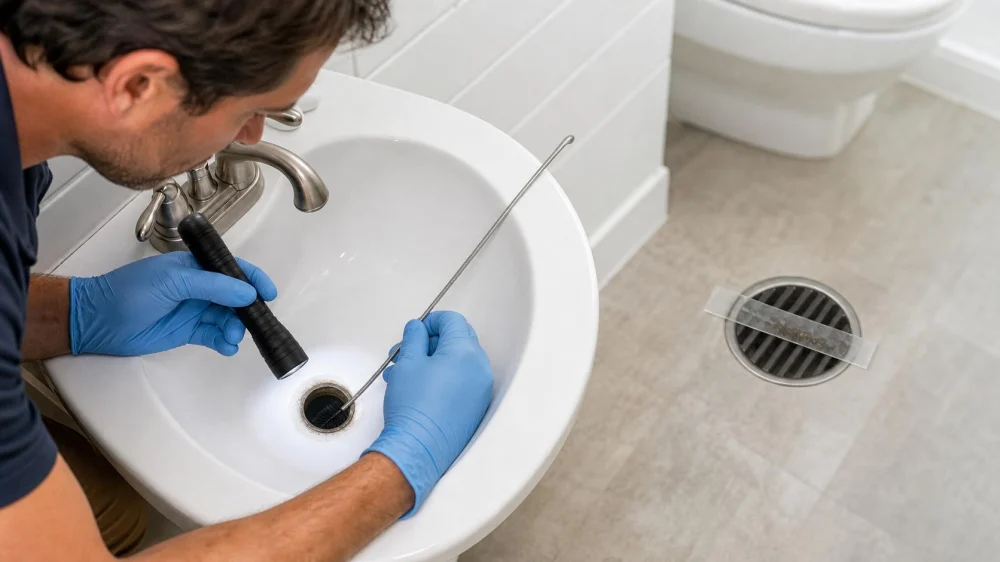
Inspect accessible areas with a flashlight while wearing suitable gloves. Look for slime around the drain lip and visible pipe wall, not just standing water. Do not reach into a disposer, dismantle plumbing under pressure, or open a sewage line. Keep children and pets away from the inspection area.
Test drains without blocking them
To screen a suspected drain, place clear tape across part of the opening with the sticky surface facing toward emerging flies, while leaving airflow and drainage space. Another option is an inverted clear container positioned safely over a dry, unused opening. Check at intervals for captured adults. Never seal a drain that must carry water, relieve pressure, or provide emergency drainage.
Test one or several drains over multiple days and label the locations. A negative night does not prove the drain is clear because emergence varies. If activity clusters near a floor or wall without an obvious fixture, consider a concealed leak or damaged sewer connection and contact a plumber rather than breaking into surfaces yourself.
Remove the organic film
The breeding layer must be physically removed. After checking the fixture and manufacturer instructions, use a stiff drain brush sized for the pipe to scrub the lip, sides, stopper assembly, and accessible trap surfaces. Clean the overflow channel when it is safely accessible. Collect loosened material and dispose of it without splashing nearby surfaces.
An enzyme- or microbe-based drain product may help break down organic buildup when its label allows the exact drain and plumbing system. Follow the label for dose, contact time, protective equipment, and compatibility. Continue sanitation long enough to cover newly emerging adults, and monitor rather than expecting the flies to disappear immediately.
Avoid ineffective or unsafe shortcuts
University extension guidance notes that boiling water, bleach, and ordinary chemical drain cleaners do not reliably remove the breeding film. Pouring several products together can release dangerous gases or cause heat and splashing. Never mix bleach with acids, ammonia, drain opener, or another cleaner. Keep every product in its original labeled container.
Do not spray aerosol insecticide into a drain unless its pesticide label specifically permits that site and method. Adult sprays offer only temporary reduction when larvae remain in slime. Avoid treating a suspected sewer break as an insect-only problem; plumbing repair and sanitation take priority.
Know when to call a professional
Call a plumber for sewage odour, backup, gurgling, repeated trap loss, dampness under a slab, or suspected pipe damage. Contact a qualified pest-management professional when identification is uncertain, several sources are active, accessible cleaning fails, or pesticide treatment is being considered. A coordinated plumber-and-pest approach may be necessary.
Ask the provider to identify the insect, show the source evidence, explain which drains or structural areas will be inspected, and separate plumbing repair from pest treatment in the estimate. Save monitoring dates and photographs so follow-up can distinguish old adults from continued emergence.
Frequently asked questions
Do drain flies bite?
Moth flies are primarily nuisance flies and are not known for biting people. Their association with wet decaying material is the reason to locate and remove the breeding source.
Will pouring bleach down the drain solve them?
Not reliably. Bleach may pass over slime without physically removing it and can create serious hazards when combined with other cleaners. Brush accessible film and use only compatible, label-directed products.
How quickly should they disappear?
Adults already present can remain after cleaning, and hidden sources can sustain activity. Monitor over days to weeks; persistent emergence means the source was missed or not fully cleaned.
Sources and limitations
The University of Minnesota Extension’s fly identification and control guide describes moth-fly appearance, breeding film, source testing, physical brushing, and why boiling water, bleach, or chemical drain cleaners are ineffective. Penn State Extension guidance also emphasizes source removal and plumbing-compatible treatment. Building systems and local pesticide rules vary.
Conclusion and next steps
Confirm the insect, map every wet source, test drains safely, and scrub away the organic film. Correct leaks and sewer defects instead of relying on adult sprays. If activity continues, bring your monitoring record to a plumber or pest professional for targeted inspection.




 Nick's Pest Control LLC4.0 (14 reviews)
 Alta Pest Control4.0 (1207 reviews)
 Red Coat Pest Solutions4.0 (62 reviews)
 Essential Pest5.0 (12 reviews)
 Bug Off Pest Control4.0 (4 reviews)
 Bug Guy Pest Control5.0 (6 reviews)
 How to Use Smart Sensors for Insect Detection | Technology for Pest Control
 How to Seal Entry Points Around Piping: Effective Methods for Home Protection
 What Happens During a Professional Pest Control Visit
 How to Prevent Pest Return After Treatment: Effective Strategies
 Pantry Moths or Beetles? Inspect Stored Food Safely
 How to Prevent Pest Ingress Around Foundations