Indoor Ant Trail: Clean the Route and Find the Source
Table of contents
Quick answer
Photograph an indoor ant trail and follow it from a safe distance to likely food, water, and entry points. Seal food, clean crumbs and grease, fix leaks, empty trash, and wipe the route with ordinary soap and water. Avoid random pesticide spraying. If bait is appropriate, identify the ant and follow the entire EPA-registered product label, keeping it inaccessible to children and pets.

GreenWorks Lawn Solutions, LLC.
PiercetonKosciusko CountyIndiana
3243 S State Rd 13, Pierceton, IN 46562, USA
Observe before you erase the trail
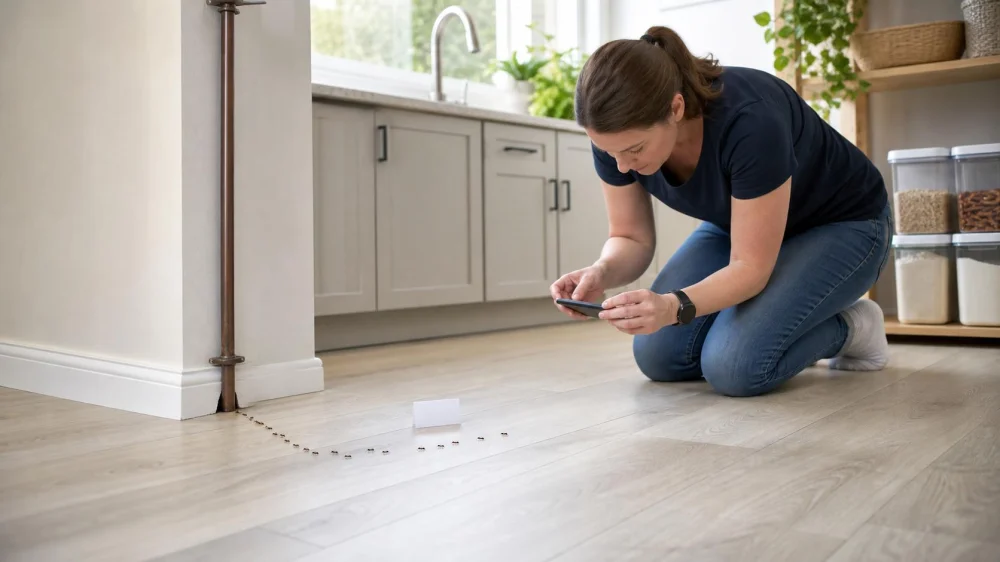
- Take a wide photo. Include the room corner, baseboard, counter edge, or window so the route can be relocated.
- Take a close photo. Use camera zoom rather than touching or crushing ants needed for identification.
- Mark the time and conditions. Note weather, recent rain, cooking, pet feeding, trash day, and plumbing use.
- Follow both directions. Look for where ants emerge and what they reach, without moving appliances or entering unsafe spaces.
- Count locations, not every ant. A map of activity in kitchens, bathrooms, windows, and utility areas is more useful than an exact count.
- Collect a specimen only if advised. A pest professional or extension office may provide safe collection instructions.
Species matters. Small household ants, carpenter ants, fire ants, and other species have different nesting, risk, and control needs. Do not base identification only on color or one blurry image.
Got'em Wasp & Hornet Removal
Grand RapidsKent CountyMichigan
4519 Sarafield St NE, Grand Rapids, MI 49525, USA
Remove food and water sources
The EPA recommends integrated pest management that begins by denying pests food, water, and shelter. Work outward from the trail:
- Place sugar, flour, cereal, snacks, and pet food in sealed containers.
- Wipe grease and syrup from bottle sides, appliances, shelves, and backsplash seams.
- Vacuum crumbs beneath toasters, cabinets, tables, and pet feeding stations.
- Rinse recyclables and remove garbage regularly.
- Feed pets on a schedule and clean bowls and surrounding floors after meals.
- Fix dripping faucets, supply leaks, condensation, and damp sponges.
- Dry sink rims, counters, tubs, and plant saucers overnight where practical.
Do not leave food uncovered to “draw ants out.” It can expand the trail and support the colony.
Clean the route
- Remove open food, dishes, toys, and pet items from the cleaning area.
- Vacuum visible ants and debris when appropriate, then empty the vacuum into a sealed outdoor trash container.
- Wash the surface with ordinary soap or detergent and water compatible with the material.
- Rinse if the product instructions require it and dry the surface.
- Clean adjacent vertical edges, cabinet lips, corners, and floor-wall junctions.
- Monitor the same location over the next several days and update the activity map.
Cleaning helps remove food residue and chemical trail cues, but it may not affect a nest. Do not mix bleach, ammonia, acids, pesticides, or other cleaners. Ventilate and follow every cleaning-product label.
Find and manage entry points
- Inspect window and door frames, pipe penetrations, baseboard gaps, utility lines, and damaged screens.
- Outside, look from the ground for vegetation touching the building, mulch against siding, cracks, and moisture near the foundation.
- Trim vegetation and correct drainage without disturbing electrical, structural, or pest nests.
- Seal small confirmed gaps with a material appropriate to the assembly after active routes and moisture problems are addressed.
- Do not seal required drainage openings, weep holes, vents, expansion joints, or unknown building gaps.
In apartments or attached housing, ants may move between units and shared utility spaces. Report activity and leak locations to management early so treatment is coordinated.
If you consider ant bait
Baits can work differently from contact sprays: foraging ants may carry bait back toward the colony. But a bait must be labeled for the target pest and use site. Some ants change food preferences, and some species need professional management.
- Read the complete EPA-registered label before purchase and placement.
- Use only the stated amount, location, and container.
- Keep bait inaccessible to children, pets, and food-contact surfaces.
- Do not place it where cleaning will spread it or where water will wash it away.
- Do not spray insecticide on or near a bait unless the label and professional plan specifically allow it.
- Track consumption and activity according to the label; do not add unapproved ingredients.
“More” is not safer or more effective. EPA pesticide guidance says not to use a product for a pest absent from the label and not to exceed the labeled amount.
When to call a pest professional
- Large ants, winged ants, sawdust-like debris, or signs of moisture-damaged wood suggest a carpenter-ant assessment.
- Stinging ants or a mound create a risk to people or pets.
- Ants appear from electrical equipment, wall cavities, healthcare areas, or food-service spaces.
- Activity persists after sanitation, leak repair, exclusion, and correctly used labeled bait.
- Children, pets, pregnancy, asthma, or another vulnerability complicates pesticide use.
- The nest location, species, or safe treatment area is uncertain.
Ask for identification, the proposed integrated plan, product names and EPA registration numbers, preparation steps, re-entry instructions, and follow-up measurements. Verify licensing with the state regulator.
Frequently asked questions
Why did more ants appear after bait was placed?
Foraging activity can increase near an attractive bait. Follow the label and monitoring plan rather than spraying the visible ants, but seek professional advice if the species or response is uncertain.
Does vinegar erase an ant trail?
Ordinary cleaning can remove residues, but no household ingredient guarantees colony control. Use a surface-compatible soap-and-water routine and address food, water, entry, and nesting conditions.
Should I seal the hole immediately?
First confirm that it is an unwanted entry gap rather than a required building opening. Sealing a visible route without addressing the colony can redirect ants elsewhere.
Are ants in the kitchen always a sanitation failure?
No. Weather, nesting, building gaps, landscaping, and moisture can contribute even in a clean home. Sanitation still reduces resources and improves control.
Sources and evidence
- U.S. Environmental Protection Agency: Pest Control Resources for Residents — food, water, shelter, entry, and responsible pesticide principles.
- U.S. Environmental Protection Agency: Pesticide Safety Tips — nonchemical controls and label compliance.
- U.S. Environmental Protection Agency: Do's and Don'ts of Pest Control — household prevention and safe professional coordination.
- U.S. Environmental Protection Agency: Selecting a Pest Control Service — service questions and treatment safety.
Conclusion and next steps
Map the trail before cleaning it, remove food and water, wash the route, and inspect likely entry points. Monitor rather than reacting with random spray. When bait is used, the label is the plan. Escalate to a licensed professional for uncertain species, building damage, stinging ants, persistent activity, or any situation where treatment safety is difficult to manage.



 Arrow American Pest & Termite Control4.0 (11 reviews)
 Houchins Pest Control Service4.0 (9 reviews)
 South Carolina Pest Control4.0 (46 reviews)
 Bee Green Pest Solutions4.0 (328 reviews)
 Coastal Pest Control4.0 (12 reviews)
 Tuff Lawn4.0 (265 reviews)
 How to Deal With Pest Infestations Near Water Features
 How to Keep Pests from Infesting Outdoor Sheds: Expert Prevention Tips
 How to Use Remote Monitoring Devices for Insects
 How to Use Low-Toxicity Sprays in Sensitive Areas – Safe Pest Control Solutions
 How to Keep Spiders Out of Your Home Year-Round
 How to Deal With Pest Intrusions Through Roof Vents