
Moving Boxes and Pest Prevention: Inspect, Pack, Unpack
On this page
- Choose clean, dry containers
- Inspect used boxes carefully
- Prepare items before packing
- Pack food, fabric, and paper separately
- Label and seal each box
- Store packed boxes off the floor
- Check the moving vehicle
- Unpack in a controlled zone
- Respond to suspicious evidence
- Remove empty boxes promptly
- Moving box checklist
Moving boxes travel through garages, storage rooms, warehouses, vehicles, sidewalks, and new living spaces. Corrugated seams and clutter can shelter insects, egg cases, droppings, or moisture damage. A careful box routine reduces the chance of carrying pests and makes suspicious evidence easier to find before it spreads.
No visual inspection guarantees that a container is pest-free. Use clean materials, keep packing areas dry, limit storage time, and unpack methodically. If you find live pests, widespread droppings, a nest, or signs that may involve bed bugs, termites, rodents, or stinging insects, isolate the area and seek qualified identification.

Eco Systems Pest Control Inc. - A Division of Modern Pest Services
NorwellPlymouth CountyMassachusetts
106 Longwater Dr Ste 111, Norwell, MA 02061, USA
Choose clean, dry containers
New boxes and clean lidded plastic bins provide a known starting point, though both still need inspection. Select sizes that can be lifted safely and close fully. Avoid crushed cardboard, split seams, greasy food boxes, damp paper, musty odor, and containers stored beside waste or active pest areas.
Plastic bins can be useful for long storage or sensitive fabric, but they must be dry before sealing. Cardboard is lighter and recyclable in many areas but absorbs moisture and creates more seams. Choose based on the item, trip, storage duration, and local disposal options.

Inspect used boxes carefully
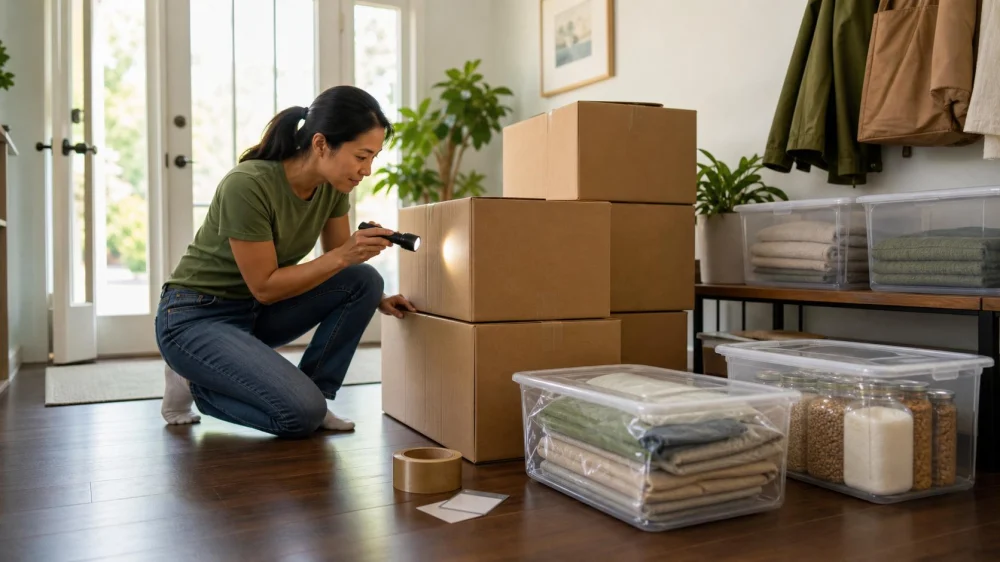
Examine the exterior, bottom, handles, folds, tape lines, corrugations, and corners under bright light. Look for live or dead insects, shed skins, egg cases, webbing, small holes, staining, gnaw marks, droppings, and moisture. Do not bring a questionable box indoors for closer inspection.
Used grocery and restaurant boxes may carry food residue. Boxes from basements, attics, curb piles, shared dumpsters, and unknown storage areas have an uncertain history. Decline them when evidence or odor is suspicious rather than attempting to make damaged cardboard safe.
Prepare items before packing
Clean and dry household items according to their material instructions. Vacuum accessible seams of luggage and appropriate furniture attachments, then dispose of vacuum contents securely under local guidance. Do not pack damp towels, plant debris, food crumbs, or trash.
Inspect books, baskets, electronics vents, pet items, seasonal decorations, and stored textiles from accessible angles. Do not dismantle energized equipment or spray pesticides into electronics. Qualified help may be needed when an item comes from a known infestation.
Pack food, fabric, and paper separately
Discard expired, open, infested, or damaged dry food according to local guidance. Pack intact pantry products in sealed, clean containers and keep them separate from books, clothing, and bedding. Preserve labels and lot codes.
Launder and fully dry washable fabric as appropriate, then place it in clean sealed bags or bins. Keep important papers in dry containers and avoid excessive loose paper as filler. Use clean packing paper or suitable cushioning rather than old food packaging.
Label and seal each box
Close top and bottom seams with appropriate packing tape. Label the room, broad contents, packing date, and priority without advertising valuables. A box inventory helps identify which containers came from a garage, storage unit, or other higher-risk area.
Sealing reduces open access but does not make a box pest-proof. Do not tape over suspicious evidence and move it anyway. Keep a questionable container isolated outdoors or in another safe designated area while arranging identification.
Store packed boxes off the floor
Use clean shelving or pallets suitable for the load and maintain space for inspection. Keep boxes away from walls, floor drains, leaks, exterior doors, vegetation, pet food, and trash. Do not stack higher than can be stable and safely reached.
Control moisture and repair leaks rather than masking odor. Check stored boxes periodically for staining, gnawing, webbing, droppings, or insects. Long-term cardboard storage creates more hiding places and makes routine inspection harder.
Check the moving vehicle
Before loading, inspect the accessible cargo floor, corners, walls, blankets, straps, and door seals for debris, moisture, droppings, nests, and live pests. Ask a rental company or mover to address suspicious conditions before your belongings enter.
Keep food and plant material contained. Load dry boxes away from leaking appliances or garden equipment. Do not apply a fogger or pesticide inside a vehicle; products must be used only where and how their labels allow, with attention to exposure and ventilation.
Unpack in a controlled zone
Choose a bright, uncluttered area with a hard floor when practical. Bring in a manageable number of boxes, inspect each exterior, and open it away from beds, upholstered furniture, and food preparation. Keep a trash bag and cleaning tools ready.
Move unpacked items to their cleaned destinations and avoid creating piles of half-empty cartons. Reinspect seams as boxes are flattened. For boxes from a known infestation, follow the pest professional's specific moving protocol rather than a general household routine.
Respond to suspicious evidence
Stop moving the box through the home. Keep people and pets away and photograph evidence without touching it. When safe and advised, contain a small specimen for identification. Do not crush an unknown insect with bare hands or disturb droppings and nests.
Contact a qualified pest professional, landlord, property manager, mover, or storage operator as appropriate. Identification should come before treatment. Random sprays can scatter pests, contaminate belongings, conflict with later treatment, or expose residents unnecessarily.
Remove empty boxes promptly
Flatten clean boxes and move them to a dry recycling or disposal area under local rules. Do not retain large stacks “just in case” near kitchens, bedrooms, utility areas, or storage rooms. Remove packing paper and tape scraps as unpacking progresses.
Do not donate or recycle boxes that contain live pests, droppings, egg cases, or contamination without guidance. Bagging, disposal, and treatment requirements vary with the pest and jurisdiction. A professional can help prevent transferring the problem elsewhere.
Moving box checklist
Use clean dry containers, inspect seams, clean belongings, separate food and fabric, label dates and source areas, seal boxes, store them elevated, check the vehicle, unpack in a controlled zone, and remove cardboard promptly. Keep a simple inventory.
Moving is easier when every box has a clear path from inspection to unpacking to removal. Reducing moisture, food residue, clutter, and storage time limits hiding places. When evidence appears, pause the move in that area and get identification before deciding how to treat or discard anything.





 Affordable Pest Control, Inc.3.0 (3 reviews)
 Ray's Pest Control and Wildlife Removal4.0 (300 reviews)
 Connecticut Pest Elimination, LLC.4.0 (159 reviews)
 City Best Pest Control5.0 (296 reviews)
 Little River Wildlife Control Services5.0 (2 reviews)
 Cooper Landscaping Inc4.0 (19 reviews)
 How to Deal With Pest Intrusions During Storms: Protect Your Home
 How to Use Smart Pest Detectors in Basements
 How to Use Preventative Barriers Early for Effective Pest Control
 Basement Moisture and Pests: Find the Source First
 How to Control Fire Ants in Your Yard | Proven Methods and Solutions
 How to Seal Entry Points in Foundation Cracks - A Complete Guide