
Basement Moisture and Pests: Find the Source First
On this page
Quick answer
When pests appear in a damp basement, document both conditions before treating either one. Check whether moisture follows rain, plumbing use, warm humid weather, or equipment operation. Look for leaks, condensation, drainage problems, wet materials, and safe-to-observe pest clues. Correct the water source, dry or remove affected materials as appropriate, seal confirmed entry points, and monitor. Avoid pesticide use until the pest and application site are correctly identified.
This guide supports routine observation in U.S. homes. It does not diagnose structural, plumbing, electrical, mold, sewage, or pest problems. Do not enter flooded, unstable, contaminated, poorly ventilated, or electrically unsafe areas.

Why moisture changes pest conditions
Moisture management is pest prevention because water, damp shelter, and moisture-damaged materials can make a basement more suitable for many organisms. The relationship does not identify a pest by itself. Some insects favor damp conditions, while rodents or other pests may simply use the same crack that admits water.
High humidity can create condensation on cool pipes, walls, or floors. Plumbing leaks can wet cabinets and framing. Rainwater may enter through grading, gutters, window wells, joints, or foundation defects. A clothes dryer, bathroom, sump system, or dehumidifier can add clues when ventilation or drainage is not working as intended.
Treating visible insects without correcting persistent moisture can leave the underlying condition unchanged. Likewise, running a dehumidifier will not repair an active pipe or foundation leak.
Map the moisture pattern
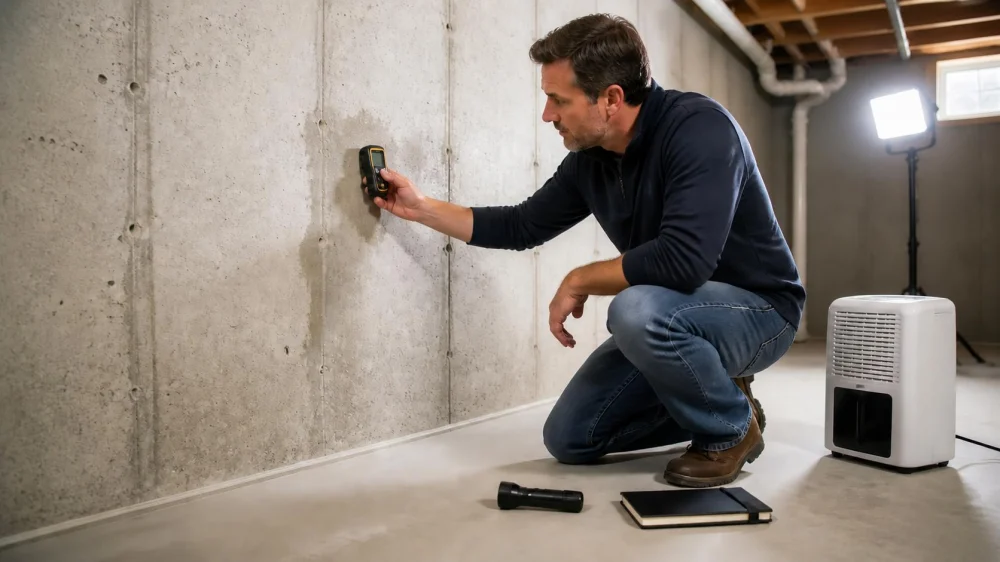
Start with time and location. Record the date, recent weather, indoor conditions, plumbing or laundry use, and where dampness first appears. Note whether the pattern is a wall stain after rain, droplets on cold surfaces, a wet floor near equipment, or a musty area around stored cardboard.
Use a flashlight for visual checks from a safe position. A household humidity monitor can show trends, and a moisture meter may help compare similar materials when used according to its instructions. These tools do not determine the source or structural severity on their own.
Photograph the same area from the same angle over time. Mark observations on a simple floor sketch: damp zones, drains, plumbing, windows, wall penetrations, stored materials, and pest sightings. Do not touch droppings, nests, unknown insects, damaged insulation, or suspected mold to improve a photo.
Inspect the basement safely
- Check for immediate hazards. Stay out if water is near electrical equipment, the structure looks unstable, sewage is present, or air quality is concerning.
- Inspect from dry, open areas. Do not crawl behind equipment, enter confined spaces, or move heavy objects without appropriate help.
- Look high and low. Observe pipe joints, window wells, rim joists, wall-floor joints, utility penetrations, floor drains, sump equipment, and appliance hoses.
- Check stored materials. Cardboard, paper, fabric, and wood can hide dampness and pest evidence. Avoid spreading contaminated material through the home.
- Record pest clues. Note live insects, wings, webbing, gnawing, tracks, or droppings without making direct contact.
- Preserve identification safely. Use a clear photo when possible, or follow a professional’s instructions for collecting a specimen.
Wear task-appropriate protective equipment and follow public-health guidance for any cleanup involving droppings, contaminated water, mold, chemicals, or sharp debris. A routine dust mask or household glove may not be adequate for every hazard.
Correct water sources before treatment
Match the correction to the confirmed source. Plumbing leaks need plumbing repair. Roof runoff, gutters, downspouts, grading, window wells, or foundation openings may require exterior drainage or building work. Condensation may call for humidity control, insulation, airflow, or equipment changes after the cause is evaluated.
Move sound belongings away from damp surfaces and use shelving that allows inspection. Dry materials promptly when it is safe and appropriate; items that cannot be cleaned or dried may need disposal under applicable guidance. Do not paint or seal over active moisture without understanding where the water will go.
Seal pest entry points only after confirming that the opening is not required for drainage, ventilation, utilities, or building movement and that no animal will be trapped inside. Select materials suitable for the substrate and exposure.
Monitor moisture and pest activity
After corrections, keep a dated log of humidity, damp areas, rainfall, repairs, and pest sightings. Place monitoring devices only where their instructions allow and where children, pets, and non-target wildlife cannot be harmed.
Compare trends rather than one reading. A dry week after a repair is encouraging, but rain-driven problems may need observation through several weather events. New activity in a different location can indicate another source or a pest that was misidentified.
If pesticide treatment is proposed, ask what pest was identified, what evidence supports the plan, which areas are included, how moisture correction affects the work, and what label-directed safety steps apply.
Basement inspection checklist
- Recent rain, plumbing use, laundry, and equipment operation recorded
- Electrical, structural, sewage, air-quality, and flood hazards checked first
- Damp zones, plumbing, drains, windows, and penetrations mapped
- Humidity or moisture readings dated and compared consistently
- Pest clues photographed without touching or spreading material
- Wet cardboard, paper, fabric, and wood evaluated safely
- Water source assigned to an appropriate repair professional
- Entry points confirmed before sealing
- Follow-up checks scheduled after repairs and rain events
When to call a professional
Contact the appropriate professional for active plumbing leaks, repeated rain entry, foundation movement, failed sump or drainage systems, damaged electrical components, sewage, broad material damage, or suspected mold that cannot be handled under current public-health guidance.
A licensed pest professional is appropriate when the pest cannot be identified, sightings persist after moisture correction, structural wood may be affected, rodents or wildlife are involved, treatment would require restricted areas or pesticides, or household members have health or exposure concerns.
Urgent help may be necessary for rapid flooding, electrical danger, fuel or sewer odors, structural instability, breathing difficulty, or other immediate safety threats. Leave the area rather than continuing an inspection.
Frequently asked questions
Does a damp basement always have pests?
No. Dampness can create favorable conditions, but it does not prove an infestation. Look for specific evidence and identify the moisture source independently.
Will a dehumidifier solve the problem?
It can reduce airborne moisture when correctly sized, drained, and maintained, but it will not repair leaks, drainage failures, or structural water entry.
Should I seal every basement crack?
No. First determine the crack’s cause and whether it relates to structure, drainage, utilities, or movement. Incorrect sealing can hide a problem or interfere with a needed function.
Can I spray insects I see near a wet wall?
Identification and label-approved site use come first. Spraying visible insects may add exposure without correcting water or reaching the actual source.
How long should I monitor after a repair?
Monitor through the conditions that previously triggered the problem, such as rain or humid weather. The appropriate period depends on the water source, repair, and pest involved.
Sources and evidence notes
This article follows general integrated pest management and building-moisture principles: remove conditions that support pests, identify the organism before treatment, correct water at its source, use pesticides only according to the label, and treat electrical, structural, sewage, and air-quality hazards as separate professional concerns. Exact decisions require site-specific inspection.
Next steps
Make a dated sketch of the basement, mark the damp area and pest clues, and compare the pattern with weather and household water use. Address immediate hazards first, assign the likely water source to the right professional, and monitor after repair. If pest activity continues, provide the log and photos to a qualified pest professional for identification and a targeted plan.



 All South Pest Control5.0 (126 reviews)
 Xterminator Pest Control4.0 (13 reviews)
 Bed Bug Plug4.0 (26 reviews)
 Northwest Exterminating - Tucker4.0 (233 reviews)
 Aptive Pest Control4.0 (71 reviews)
 Orkin4.0 (202 reviews)
 How to Prevent Pest Intrusions at Door Frames: Effective Solutions for Homeowners
 How to Keep Wasps Away From Outdoor Seating
 How to Keep Crickets Out of Your Home
 How to Deal With Pest Issues Near Pools – Effective Control Tips
 How to Seal Gaps at Door Bottoms to Block Insects – Easy Methods for Effective Pest Control
 How to Spot Pest Activity in Wall Voids