Outdoor Trash Bin Pest Prevention: Clean, Close, and Monitor
Table of contents
Quick answer
Use an intact outdoor bin with a lid that closes fully, bag household waste securely, remove spills, and follow the local collection schedule. Keep the bin on a stable cleanable surface away from doors when practical, without blocking access or violating rules. Inspect for holes, gnawing, flies, larvae, droppings, and tipped containers. Correct food, water, and shelter before considering pesticides.
Economy Termite & Pest Control
BloomingtonMonroe CountyIndiana
2625 W Bolin Ln, Bloomington, IN 47403, USA
Why bins attract pests
Trash can provide food, moisture, odor, warmth, and shelter. Flies may breed in moist organic residue. Ants and cockroaches can follow food deposits. Rodents, raccoons, and other wildlife may tear bags or tip containers. The bin itself is not always the source; spilled material beneath it, overflowing recycling, pet food, compost, or nearby vegetation may sustain activity.
Outdoor activity does not prove that pests have entered the home. It does show that the site deserves attention, especially when a bin sits beside a door, vent, garage, or damaged wall. Integrated pest management begins by removing what pests need and monitoring the result.
Different pests require different responses. A few flies after collection, a recurring trail of ants, fresh rodent gnawing, and an aggressive wild animal are not the same problem. Photograph signs from a safe distance and avoid choosing a pesticide before the pest and route are known.

General Pest Environmental Solutions
NapervilleDuPage CountyIllinois
5s440 Tuthill Rd, Naperville, IL 60563, USA
Set up the area
Choose a bin approved by the local waste service. The lid should close without a bag protruding and the body should have no holes or broken hinges. Wheels should support stable movement. If wildlife frequently opens lids, ask the waste authority which compatible locking or animal-resistant options are allowed; improvised fasteners can interfere with collection.
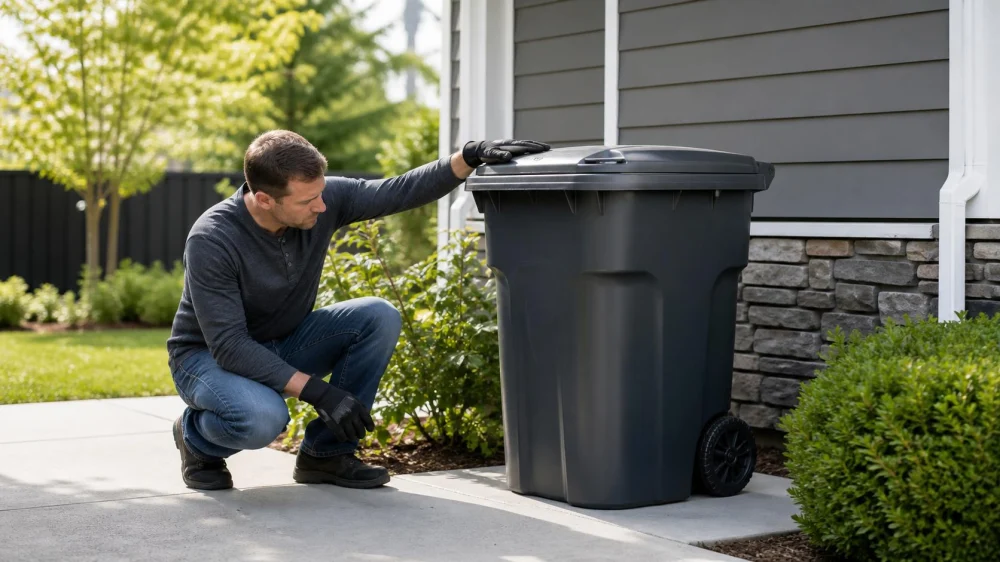
Place the container on a level, durable surface that can be inspected and cleaned. Maintain enough clearance to see spills and damage. Keep it away from doors and windows when the property layout and local rules permit, but do not move it into a fire route, sidewalk, utility space, neighbor's property, or inaccessible location.
Trim vegetation according to safe landscaping practices so branches and dense ground cover do not hide the bin or provide a route. Do not disturb nests, burrows, or wildlife habitat without identifying the animal and checking applicable rules. Keep outdoor faucets and hoses from dripping near the waste area.
In apartments and shared housing, report an overflowing dumpster, broken lid, drainage issue, or repeated pest evidence to management with dated photographs. The effective fix may require coordinated collection, enclosure repair, cleaning, and building exclusion rather than an individual resident's action.
Manage waste
Drain ordinary food waste when appropriate and place it in a sound bag. Tie bags before carrying them outside, and avoid dragging them across the ground. Do not pack a bin above the point where the lid can close. If capacity is repeatedly insufficient, request a larger container or more frequent collection instead of balancing loose bags on top.
Follow local rules for meat scraps, grease, diapers, pet waste, yard waste, compost, and recyclables. Rinse recyclables when required and let them drain. Residue in bottles, cans, and takeout containers can attract pests even when the garbage bin is clean.
Put waste out according to the collection schedule. Leaving loose bags outside overnight can increase access. After pickup, return the container to its storage location and inspect the ground for torn plastic or spills.
Do not add mothballs, loose pesticide dust, bleach, fuel, or another chemical to a trash bin as a homemade repellent. A pesticide may only be used for sites and pests allowed by its label, and household chemicals can create exposure, reaction, fire, and disposal hazards.
Clean safely
Wear gloves suitable for the task and closed footwear. Keep children and pets away. Remove ordinary loose debris with tools designated for waste handling. If you find extensive rodent droppings, a carcass, needles, unknown chemicals, or other hazardous material, stop and use the appropriate public-health or waste service rather than cleaning it as a routine spill.
Use the mildest cleaning method that meets local guidance and the bin manufacturer's instructions. Work in a ventilated outdoor area where wash water will not enter storm drains, waterways, gardens, or neighboring property. Local rules govern wastewater disposal.
Never mix cleaning products. Bleach combined with certain other cleaners can release dangerous gases. Read every label, use the stated dilution and protective equipment, and keep products in original containers. More concentrated product is not automatically more effective.
Allow the bin to dry before adding a new bag when practical. Clean the surrounding surface and tools, then wash hands. A fragrance may mask odor but does not remove organic residue or repair a damaged lid.
Monitor and escalate
Check the area after collection and during the period when activity is usually seen. Record lid condition, spills, tracks, droppings, gnawing, larvae, and damaged bags. A repeated pattern can reveal whether the issue begins before collection, after wildlife visits, or when a shared bin overflows.
Inspect nearby entry points without reaching into holes or moving heavy objects alone. Look for damaged door sweeps, vents, screens, garage seals, and utility gaps. Coordinate repair with the property owner or qualified trade. Do not seal an opening if an animal could be trapped inside.
Call a pest or wildlife professional when the animal cannot be identified, activity persists after sanitation and exclusion, a nest or burrow is present, wiring is gnawed, or the animal behaves aggressively. Wildlife rules and licensed removal requirements vary. For bites, scratches, suspected pesticide exposure, or urgent health symptoms, contact the appropriate medical or poison-control service.
If a pesticide is recommended, request the product name, label, target pest, application site, preparation requirements, reentry directions, and follow-up plan. Keep the service record and continue sanitation; a treatment does not make overflowing waste harmless.
Limitations
This guide cannot identify an animal from a mark, authorize wildlife removal, or determine a safe chemical application. Waste rules, stormwater requirements, landlord duties, and wildlife law vary. Follow local authorities, current product labels, and qualified professional guidance.
Do not approach aggressive wildlife, disturb stinging insects, handle unknown droppings, or enter dumpsters. People with medical vulnerabilities should avoid exposure and seek individualized guidance.
Sources and evidence
The US Environmental Protection Agency's resident resources recommend removing food, water, and shelter, sealing entryways, and following pesticide labels. EPA's integrated pest management principles emphasize prevention, monitoring, and combining appropriate controls with the least practical hazard.
- EPA pest-control resources for residents
- EPA IPM principles
- EPA citizen's guide to pest control and pesticide safety
Frequently asked questions
Will a stronger-smelling cleaner keep pests away?
Odor is not a reliable control plan. Remove residue, repair the lid, manage collection, and address access. Use cleaners only according to their intended directions.
Can I put loose bait in the trash bin?
Do not improvise. Pesticides must be used only as the label allows, with attention to children, pets, wildlife, collection workers, and the environment.
Why are there maggots after pickup?
Flies may have accessed moist organic residue or bags before collection. Clean safely, dry the bin, close the lid, and improve waste timing and containment.
Should I move the bin far from the house?
Increase separation from entries when practical, but preserve safe access and comply with local placement, fire, accessibility, and property rules.
What if raccoons keep opening the lid?
Ask the waste service about compatible animal-resistant containers or locks. Do not approach, trap, or poison wildlife without qualified guidance and legal authority.
When should a professional inspect?
Seek help for repeated activity, damaged structures or wiring, nests, aggressive animals, extensive contamination, uncertain identification, or a problem shared across units.
Conclusion
Outdoor bin pest prevention depends on reliable containment, routine cleanup, timely collection, and evidence-based monitoring. Keep the lid closed, remove spills, reduce nearby water and shelter, and repair access routes. When activity persists or wildlife creates risk, use qualified help and follow labels and local rules instead of escalating with improvised chemicals.



 Affordable Pest4.0 (977 reviews)
 RidAway5.0 (50 reviews)
 Top Turf Lawn Care and Pest Management4.0 (834 reviews)
 Providence Pest Control Solutions5.0 (10 reviews)
 Local Wildlife Experts of Athens5.0 (25 reviews)
 JP Pest Services4.0 (117 reviews)
 How to Use Targeted Barrier Treatments for Effective Pest Control
 How to Stop Rodents From Climbing Into Homes
 How to Deal With Pest Intrusions Through Roof Vents: A Complete Guide
 How to Monitor Pest Return After Rainy Seasons
 How to Keep Cockroaches From Reinfesting After Treatment
 How to Seal Pest Entry at Crawlspace Doors