

Pest Control Service Plans: Compare Visits, Triggers, and Exit
On this page
Quick answer
Compare pest control service plans by the pests covered, inspection work, treatment triggers, visit schedule, prevention tasks, callback rules, products, records, total cost, renewal, and cancellation—not by visit frequency alone. A useful plan responds to evidence and property conditions. Ask what happens at a visit with no activity and how the program changes when prevention works.

Advanced Pest Services
GreensboroGuilford CountyNorth Carolina
3802 Gilmore Dr, Greensboro, NC 27407, USA
Compare recurring and on-demand plans
A pest control service plan is an agreement for inspection, monitoring, prevention, treatment, or callbacks over a defined period. Common models include:
- One-time service: inspection and treatment for a stated issue, with limited or no ongoing coverage;
- Seasonal service: visits tied to expected activity or property conditions;
- Recurring inspection plan: scheduled monitoring with treatment based on findings;
- Recurring application plan: scheduled treatments, sometimes with inspection and prevention; and
- On-demand coverage: a membership or agreement that provides eligible callbacks between planned inspections.
The best fit depends on pest evidence, building type, climate, vulnerability, neighboring conditions, tolerance, prevention needs, and contract value. More applications do not automatically mean better control.

Define covered pests and treatment triggers
List each pest included and excluded. General terms such as “household pests” may not include termites, bed bugs, mosquitoes, ticks, wildlife, wood-destroying organisms, stinging insects, stored-product pests, or a pest requiring specialty work.
For each covered pest, ask:
- what inspection or monitoring occurs;
- what evidence triggers treatment;
- which nonchemical prevention or repair steps are included;
- which property conditions the customer must correct;
- how activity is measured after service;
- when a callback is included or separately charged; and
- what happens when identification remains uncertain.
A preventive application must still comply with its product label and professional judgment. Ask why the method and location are appropriate when no target activity is found.
Understand each visit and method
Request a sample visit report. A useful record identifies inspected areas, findings, inaccessible spaces, monitors, sanitation, moisture, entry points, repairs, traps or devices, products, application locations, applicator, preparation, reentry, and next steps.
Confirm whether the company needs interior access at every visit or only after a finding or request. Know how appointments, keys, gates, alarms, tenants, pets, children, aquariums, and sensitive spaces are handled.
Ask whether the plan adapts. A monitoring result, season, construction change, new tenant, moisture repair, or successful exclusion may justify a different visit or method. A fixed routine without recorded findings is harder to evaluate.
Check total cost, renewal, and exit
Calculate the complete agreement:
- initial inspection or treatment charge;
- monthly, quarterly, seasonal, or annual payments;
- minimum term and number of included visits;
- callback, specialty pest, product, device, removal, repair, or after-hours charges;
- price-adjustment notice and automatic-payment terms;
- automatic renewal and notice method;
- cancellation deadline, method, fee, and effect on warranties; and
- refund or balance treatment when the property is sold, rented, vacated, or inaccessible.
Ask whether the plan transfers to a new owner or address and whether that requires a new inspection. Preserve proof of cancellation and monitor the payment method for a final charge.
Use a service-plan checklist
- Document current evidence. Start with the pest, location, and property conditions.
- Verify the provider. Check required company and applicator credentials and insurance.
- List covered pests. Write every exclusion and specialty charge.
- Define visit work. Separate inspection, monitoring, prevention, treatment, and reporting.
- Ask for treatment triggers. Connect action to findings and labels.
- Calculate annual cost. Include the initial service and likely extras.
- Read renewal and cancellation. Test sale, move, missed access, and plan-change scenarios.
- Review reports over time. Keep the plan only while records show useful work and adaptation.
Limitations and safety notes
- Pesticide, service-contract, renewal, cancellation, landlord-tenant, licensing, and wildlife rules vary across the United States.
- This article provides general consumer and pest-management guidance, not legal, medical, pesticide, or pest-identification advice.
- All pesticide use must follow the product label and applicable requirements.
- For suspected exposure, follow the label and contact emergency services or the appropriate poison-control resource promptly.
- Some infestations, structural conditions, wildlife, or public-health risks need specialized evaluation outside a general service plan.
Frequently asked questions
Is quarterly pest control necessary for every home?
No universal schedule fits every property. Evaluate evidence, pest biology, building conditions, prevention, product labels, climate, and the actual work performed.
Should a technician treat when no pests are found?
Ask what prevention or label-supported purpose applies and whether monitoring, exclusion, sanitation, or moisture control is more appropriate. The plan should explain the decision.
Are callbacks always free?
No. They may depend on the pest, waiting period, customer preparation, access, included area, and contract term. Read the exact conditions.
Can I cancel after the pest disappears?
The agreement controls the term and cancellation process. Review it before signing and preserve written cancellation. Consider whether monitoring or prevention still has value.
What should happen at a visit with no activity?
The technician can inspect, review monitors, document conditions, check prevention measures, and explain why no treatment is needed or why a specific action remains justified.
Conclusion and next steps
Compare one-time, recurring, and on-demand models against the actual pest risk. Require covered pests, visit work, treatment triggers, records, full cost, and exit terms in writing. Choose a plan that can reduce intervention when monitoring and prevention succeed, rather than one that measures value only by applications.
Evidence note: These recommendations reflect common integrated-pest-management, pesticide-label, recurring-service, consumer-contract, and property-record practices. Current authority comes from regulators, labels, professional guidance, contracts, and site evidence.



 Superior Pest Elimination4.0 (222 reviews)
 Knepp's Pest Control5.0 (3 reviews)
 D-Bug Pest Control, Inc.5.0 (102 reviews)
 Evergreen Pest Solutions4.0 (3581 reviews)
 Able Exterminators3.0 (2 reviews)
 Blue Ridge Exterminating Co4.0 (15 reviews)
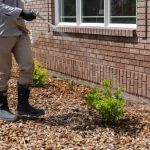 How to Use Granular Treatments Around Foundations for Effective Pest Control
 How to Monitor Pest Entry in Weak Spots
 Why Pest Control is Critical for Food Businesses: A Must-Have for Safety
 How to Block Pest Entry Points Around Windows
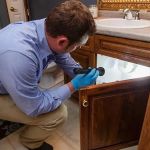 How to Inspect for Pests Around Plumbing Lines for a Safer Home
 How to Create a Pest-Resistant Garden