Wasp Nest Near a Door: Create Distance and Plan Safe Removal
On this page
Quick answer
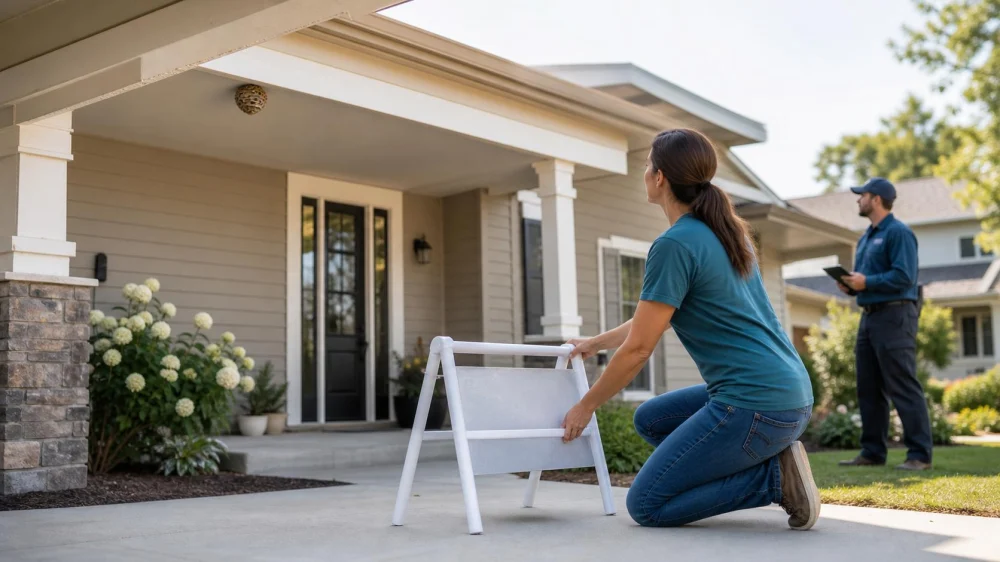
A wasp, hornet, or yellowjacket nest beside a frequently used door can create repeated close contact and a sting hazard. Keep people and pets away, close that entrance from inside if it can be done without passing the nest, and use another safe route. Mark the area at a distance and contact a licensed pest management professional, especially when the nest is concealed, elevated, large, highly active, or near someone with a known sting allergy.
Do not swat at insects, strike the nest, block an active entrance, spray from a ladder, use fire or water, or stand directly below it. Species, nest location, activity, building access, and occupants’ health all affect the safest plan. Honey bees and some other beneficial pollinators may need identification and relocation rather than insecticide treatment.
Mosquito Joe of Virginia Beach-Norfolk
468 S Independence Blvd Suite A-102, Virginia Beach, VA 23452, USA
Create distance immediately
Ask everyone to move calmly away from the flight path. Bring children and pets indoors through another entrance if possible. From a safe location, lock or post the affected door so a family member, visitor, delivery worker, landscaper, or maintenance contractor does not unknowingly walk beneath the nest. Avoid placing a barrier so close that installation disturbs the insects.
Pause mowing, trimming, pressure washing, construction, outdoor dining, and loud or vibrating equipment near the area. Shut nearby windows from inside when that does not require approaching the nest. Tell household members where the activity is and which route to use. In a rental, condominium, workplace, or shared property, notify the responsible manager promptly and document the notice.
Observe without approaching
Use a zoom camera from a protected distance to record the nest shape and where insects enter. Note whether the nest is an open paper comb under an eave, a covered hanging structure, a hole in soil, or traffic entering a wall gap. Record activity at different times without blocking the route. Do not lean out a window, climb a ladder, probe a void, or move vegetation to improve the photo.
A photo can help a professional distinguish paper wasps, yellowjackets, hornets, honey bees, bumble bees, solitary wasps, and other insects. Identification matters because social behavior, sting risk, nest construction, and removal options differ. Never catch a live specimen by hand. If a dead insect is already well away from the nest, it can be photographed beside a ruler without touching it.
Check who and what is at risk
Risk is higher beside the only accessible entrance, a child-care route, mail area, mobility ramp, utility meter, play space, pet run, or work zone. Consider anyone who cannot quickly retreat or follow verbal directions. Tell the pest professional about known severe sting allergy, asthma, pregnancy, sensitive pets, aquariums, pollinator gardens, wells, drains, and ventilation intakes so the service plan can account for them.
The University of Minnesota Extension’s overview of wasps and bees notes that nests near high-traffic places such as walkways or doors may require control to reduce sting threat. A nest well away from activity can present a different decision; location and exposure matter as much as the fact that a nest exists.
Know when not to attempt DIY removal
Use a professional when anyone nearby has a sting allergy, the species is uncertain, insects enter a wall or roof void, the nest is underground, access requires a ladder or roof, the nest is large, activity is intense, or a safe escape route is unavailable. Also get help when treatment could reach wiring, an air intake, food, water, a drain, neighboring property, or a protected pollinator colony.
Do not improvise with gasoline, bleach, boiling water, smoke, fire, a garden hose, expanding foam, glue, rocks, or an unlabeled household chemical. These methods can provoke insects, cause burns or contamination, damage the building, trap insects inside a wall, or drive them into occupied rooms. Protective clothing alone does not make a high-risk nest safe for untrained work.
Decide whether removal is needed
Some out-of-the-way nests can be monitored and avoided, particularly when they do not threaten people or building access. Social wasp colonies in many climates are seasonal, but timing varies by region and species. Do not assume a nest is inactive merely because temperatures cooled or no insects are visible during a brief check.
Near a main door, relocation of traffic may only be a temporary measure. Ask a local expert to identify the insect and discuss prompt control, conservation options, or waiting until the colony is inactive. Honey bees inside a structure may require a beekeeper or bee-removal specialist who can remove comb and address the cavity; spraying visible bees without managing the colony can leave a larger building problem.
Hire a qualified pest professional
Verify the business and applicator through your state pesticide or structural pest-control licensing agency. Describe the nest location, height, building material, flight path, estimated size, access restrictions, recent stings, and sensitive occupants. Send photos if requested. Ask whether identification and inspection occur before the treatment recommendation.
Request a written plan stating the target insect, nest location, method, product and EPA registration number if a pesticide will be used, preparation, exclusion zone, ventilation needs, reentry time, cleanup, follow-up, warranty, and total price. Confirm who removes the nest or opens and repairs a wall. Those tasks may involve different trades, and a pest-control license does not automatically cover structural repair.
Treat the pesticide label as the rule
The EPA explains that a pesticide label legally defines where, how, how much, and how often a registered product may be used. Read the entire label before purchase or application, including first aid, protective equipment, environmental hazards, wind or runoff restrictions, storage, disposal, and reentry. The word “natural” does not replace these directions or prove a product is harmless.
Never use an indoor product outdoors or an outdoor product inside unless the label explicitly allows that site. Do not use more than directed, mix products, transfer pesticide into a drink container, or apply near food, toys, pets, flowering plants, water, or ventilation contrary to the label. Keep bystanders outside the treatment area for the full stated period.
Verify removal and repair the site
Follow the provider’s instructions about how long to avoid the area. Do not immediately plug an opening or remove a nest unless the professional confirms that activity has ended and explains how to proceed. Returning insects may indicate an untreated entrance, a concealed nest, or normal short-term activity that requires follow-up; document it from a distance and call the provider.
Once the nest and colony are managed, repair gaps, damaged screens, loose soffits, and other entry points with building-appropriate materials. Clean food residue, keep trash lids closed, collect fallen fruit, manage outdoor drinks, and inspect eaves and door areas periodically. Exclusion should be done after control so insects are not sealed into occupied space.
Respond to a sting or exposure
Move away from the nest without swatting. For a mild local sting reaction, wash the area and use a cold pack wrapped in cloth; ask a clinician or pharmacist about medicines appropriate for the person. Scrape away a visible honey bee stinger promptly if present, but do not delay leaving the danger area to inspect the skin. Watch for symptoms beyond the sting site.
Use prescribed epinephrine immediately as directed and call emergency services for trouble breathing, throat or tongue swelling, widespread hives, faintness, confusion, repeated vomiting, or another sign of anaphylaxis. Multiple stings, a sting inside the mouth or eye, or symptoms in a child or medically vulnerable person also warrant prompt professional guidance. For pesticide exposure, move away, follow the product label’s first-aid instructions, and call Poison Control at 1-800-222-1222 in the United States; call emergency services for severe symptoms.


 Killinger Pest Solutions4.0 (4 reviews)
 Action Pest Exterminating4.0 (94 reviews)
 Essential Pest5.0 (12 reviews)
 Rainbow Restoration of Cape May County5.0 (5 reviews)
 Medwick Pest Control5.0 (24 reviews)
 Orkin4.0 (1195 reviews)
 How to Use Bait Stations Safely Around Children
 How to Use Preventative Barriers in Crawlspaces – Expert Home Protection Guide
 How to Recognize Pest Eggs and Larvae Before It’s Too Late
 Why Bugs Gather Around Porch Lights and What to Change
 How to Detect Termites Before Structural Damage Occurs
 How to Safely Deal with Dead Rodents in Your Home