
Bed Bug Luggage Inspection After Travel: A Safe Checklist
On this page
- Quick answer
- Understand the risk
- Before bringing luggage inside
- Know what evidence looks like
- Inspect luggage step by step
- Handle clothing and washable items
- Handle nonwashable belongings
- Vacuum and contain carefully
- Preserve a specimen or evidence
- Avoid risky treatments
- Monitor after unpacking
- When to call a professional
- Reduce risk on future trips
- Unpacking checklist
- Frequently asked questions
- Next steps
Quick answer
After travel, unpack on a hard, uncluttered surface away from beds and upholstered furniture. Keep luggage contained while you inspect seams, piping, pockets, zipper folds, handles, and wheel housings with a bright flashlight. Move clothing directly into closed bags or the laundry process, following fabric care labels and official heat guidance.
Look for live insects, pale shed skins, small whitish eggs, and dark spotting in protected seams. A bite or skin mark alone cannot confirm bed bugs. If you find a suspicious specimen, contain it for identification, stop moving belongings through the home, and contact a qualified pest-management professional. Do not use foggers, outdoor pesticides, or improvised heat.
Rainbow Restoration of Kanawha & Putnam Counties
Saint AlbansKanawha CountyWest Virginia
401 5th St, St Albans, WV 25177, USA
Understand the risk
Bed bugs can hitchhike in luggage, clothing, backpacks, and other belongings. They do not indicate poor hygiene. Hotels, transit, dormitories, hospitals, homes, and many other places can experience introductions.
Travel does not mean you brought bed bugs home. A calm, contained inspection reduces unnecessary pesticide use and limits the number of places that must be checked if evidence is found.
Bed bugs crawl; they do not fly or jump. They often hide in narrow protected spaces close to where people rest. In luggage, likely locations include stitched seams, folded fabric, pocket edges, zipper areas, labels, frame joints, and wheel or handle assemblies.
They are visible to the unaided eye, although young stages and eggs are small. Good lighting and a magnifier help. Do not identify an insect solely from a blurry photo or a skin reaction.

Before bringing luggage inside
If practical, place luggage temporarily in a garage, utility area, entry zone, bathroom, or another hard-surface space separated from bedrooms. Choose an area you can light and clean. Do not place bags on a sofa, bed, upholstered bench, or carpeted bedroom floor.
Keep suitcases closed until you have bags, a flashlight, a light-colored inspection surface, and a plan for clothing. Minimize carrying individual items through the home.
In an apartment or shared building, do not leave belongings in a common hallway or shared laundry room. Follow building rules and avoid creating a tripping or fire-exit hazard.
If luggage has already reached a bedroom, do not panic or throw it outdoors. Close the bag, reduce movement, and inspect the route and resting place as part of a measured response.
Know what evidence looks like
Adult bed bugs are flat, oval, and reddish brown, roughly comparable in size to an apple seed. Younger nymphs are smaller and may be pale or translucent before feeding. Actual size and color vary.
Eggs are tiny, pale, and attached in protected places. Shed skins resemble empty pale insects. Dark brown or black spotting can occur near hiding sites, but stains alone are not conclusive.
Many harmless insects are mistaken for bed bugs, including carpet beetles, booklice, spider beetles, and cockroach nymphs. A pest professional or qualified extension service can confirm a specimen.
Skin reactions vary widely and may appear late or not at all. Doctors generally cannot confirm the presence of bed bugs from bites alone; environmental evidence is necessary.
Inspect luggage step by step
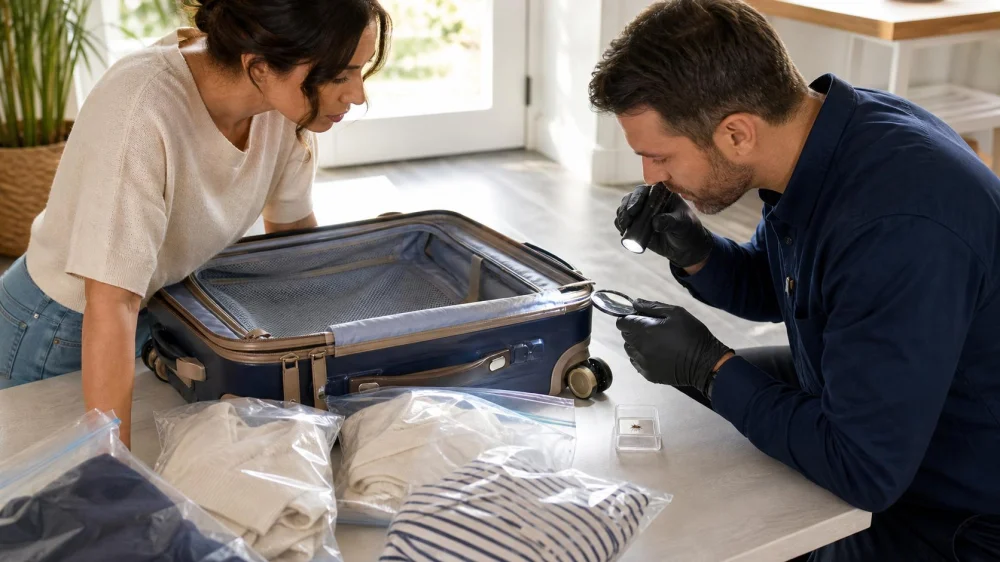
Work with one bag at a time on a light-colored hard surface. Use a bright flashlight and, if available, a magnifier. Wear disposable gloves if preferred, but do not let gloves create a false sense that spreading items is safe.
Examine the outside before opening. Follow every stitched seam slowly. Check piping, zipper teeth and folds, fabric labels, pockets, straps, handles, telescoping handle channels, feet, and wheel housings.
Open the bag carefully and inspect the lid, lining, dividers, mesh pockets, corner protectors, and frame joints. Look beneath removable inserts without tearing permanently attached fabric.
Place each cleared item into a clean closed container or directly into the appropriate laundry bag. Keep unchecked and checked items separate. Do not shake clothing, which can scatter insects or eggs.
For a rigid suitcase, inspect screw recesses, overlapping shells, hinges, gaskets, and handle mounts. For a soft bag, pay extra attention to folds and stitching. Backpacks require inspection of padded straps and compartments.
Handle clothing and washable items
Move travel clothing in sealed bags to the laundry area. Follow garment care labels. Heat from a clothes dryer can be an important control tool when the fabric tolerates it, but effective time and temperature depend on the dryer, load, item thickness, and official guidance.
Do not overload the dryer. Items must tumble and reach the necessary conditions throughout. If clothes are wet or dirty, wash them as appropriate and use a dryer setting safe for the fabric.
Place processed items into clean bags or containers rather than returning them to unchecked luggage. Clean the lint screen according to the appliance instructions and dispose of debris in a sealed bag.
Dry cleaning may be an option for some items. Tell the cleaner about the concern before bringing a loose item into the business so staff can advise on containment and service.
Handle nonwashable belongings
Electronics, books, shoes, toiletries, and delicate objects require item-specific care. Inspect creases, cases, soles, laces, covers, and compartments. Avoid applying liquid pesticides, alcohol, steam, or heat to electronics.
Place uncertain items in clear, durable, sealed containers and label the date and contents. Isolation alone may require a long time and is affected by temperature and insect life stage, so do not guess at a short holding period.
Commercial heat chambers and other devices must be designed for bed bug control and used exactly as instructed. Some belongings can be damaged or create a fire risk. Ask a pest professional about valuable, heat-sensitive, or medically necessary items.
Freezing is not a simple household shortcut. Effectiveness depends on sufficiently low, stable temperatures maintained throughout the object for an appropriate period. Home freezers and bulky items may not achieve uniform conditions.
Vacuum and contain carefully
A vacuum can remove visible insects and debris from luggage seams, but it is not a complete treatment. Use a crevice attachment and move slowly along seams and folds. Avoid brushing insects into the air.
Afterward, immediately seal and discard the vacuum bag in an outdoor trash container. For a bagless vacuum, follow manufacturer instructions, empty contents into a sealed bag outdoors if safe, and clean the collection components without spreading debris.
Inspect the vacuum and attachments before storing them. Do not move a potentially contaminated vacuum through multiple rooms without containment.
Steam can kill bed bugs when appropriate equipment, temperature, speed, and technique are used, but it can damage luggage and cause burns or moisture problems. Professional application is safer when evidence is confirmed.
Preserve a specimen or evidence
If you find a suspicious insect, capture it with clear tape or in a small sealed container. Keep it intact. Photograph it from above beside a ruler or coin for scale without opening the container repeatedly.
Record the date, exact location, travel dates, accommodations, and where the luggage was placed at home. Photograph stains or shed skins before cleaning.
Do not mail a specimen or carry an open container to an office without instructions. Contact a licensed pest company, local extension resource, building manager, or other qualified identifier and ask how to submit evidence.
A confirmed identification guides the next step. Treating carpet beetles or another harmless insect as bed bugs can lead to needless expense and pesticide exposure.
Avoid risky treatments
Do not use total-release foggers or “bug bombs.” They may not reach hiding places and can create exposure, fire, or explosion risks when misused. Scattering insects to new areas can also complicate control.
Do not spray luggage with products unless the label specifically allows that site and use. Never apply outdoor, agricultural, veterinary, or garden pesticides indoors or to clothing, bedding, skin, electronics, or travel items.
Do not use rubbing alcohol, gasoline, kerosene, essential-oil mixtures, or open-flame heat. These approaches can poison occupants, damage belongings, or start a fire.
Do not place luggage in a closed car, oven, sauna, or improvised heated enclosure. Temperature is hard to control, and fire, fumes, battery damage, or melted materials can result.
Do not discard a mattress, furniture, or luggage based only on bites. If disposal becomes necessary after professional evaluation, follow local rules and mark or contain items so others do not take them.
Monitor after unpacking
After clearing the unpacking area, inspect nearby baseboards, furniture joints, and the path used to move luggage. Vacuum visible debris and dispose of it safely.
Monitor sleeping areas without moving to a different room, which can make detection harder if bed bugs are present. Interceptor devices under bed legs may help detect activity when installed and maintained correctly.
Keep bedding from touching the floor, reduce clutter near the bed, and inspect mattress seams and bed-frame joints periodically. Do not apply pesticides to the bed unless a product is legally labeled and professional guidance supports its use.
Record suspected evidence and dates. A single unexplained skin mark is not enough to declare an infestation, but a confirmed insect warrants prompt action.
When to call a professional
Contact a licensed pest-management professional when you find a likely bed bug, see repeated spotting or shed skins, experience continuing unexplained bites with environmental evidence, or cannot inspect complex luggage and furnishings.
In rental housing, notify the landlord or property manager promptly according to the lease and local requirements. Do not independently treat neighboring units or common areas.
Ask the company about inspection methods, preparation steps, pesticide and nonchemical options, follow-up visits, guarantees, and the plan for adjoining units. Compare written proposals and verify licensing where required.
For skin symptoms, consult a health professional. Seek urgent help for trouble breathing, severe swelling, signs of infection, or another serious reaction.
Reduce risk on future trips
Pack a flashlight and several sealable bags. At lodging, keep luggage on a rack away from walls and upholstered furniture while you inspect the sleeping area. Avoid placing bags on the bed.
Check mattress seams near the head of the bed, the headboard area, and luggage rack joints without dismantling property. If you find suspicious evidence, photograph it, contain belongings, and contact management.
Keep worn clothing in a closed bag separate from clean clothing. Minimize loose items in drawers. Inspect luggage again when returning home even if no signs were noticed during the trip.
Preventive habits reduce risk but cannot guarantee that a hitchhiking insect will never occur. The goal is early detection and controlled handling.
Unpacking checklist
- Choose a bright hard-surface area away from beds and upholstery.
- Prepare sealed bags for unchecked, washable, and cleared items.
- Inspect exterior seams, zippers, pockets, handles, and wheels.
- Inspect the lining, dividers, frame, labels, and corners.
- Move clothing directly to an appropriate laundry process.
- Contain uncertain nonwashable items for expert advice.
- Vacuum luggage carefully and seal vacuum debris.
- Capture and photograph suspicious specimens.
- Avoid foggers, unlabeled pesticides, and improvised heat.
- Monitor sleeping areas and seek professional identification when needed.
Frequently asked questions
Should I throw away my suitcase?
Usually not based on suspicion alone. Inspect and contain it, then ask a pest professional about treatment options if evidence is confirmed. Disposal without containment can spread insects.
Can bed bugs live in a hard-shell suitcase?
They can hide in seams, hinges, handle assemblies, gaskets, fabric dividers, and wheel housings even when broad surfaces are smooth.
Can I tell whether a hotel had bed bugs from bites?
No. Skin reactions have many causes and timing varies. Environmental evidence and a correctly identified specimen are more reliable.
Is washing alone enough for clothing?
Water temperature and washing may not provide uniform control. Drying under conditions appropriate for the fabric and supported by official guidance is commonly emphasized. Follow care labels and expert instructions.
How soon would I notice an introduction?
Detection time varies. Small introductions can be difficult to notice, and skin reactions are unreliable. Careful unpacking and continued monitoring provide better evidence than waiting for bites.
Next steps
Contain luggage, inspect one bag at a time, process washable items appropriately, and isolate uncertain belongings. Preserve any specimen and seek reliable identification before treating. If bed bugs are confirmed, coordinate a professional plan promptly and follow building notification requirements.
This guide offers general prevention information. Always follow product labels, appliance and fabric instructions, pest-professional directions, and local requirements.



 Regan Pest Services4.0 (47 reviews)
 Greens Pest Control4.0 (14 reviews)
 Ace Walco Termite & Pest Control4.0 (292 reviews)
 Babers Bee Company5.0 (1 reviews)
 Advantage Pest Control Inc.5.0 (1 reviews)
 Skyway Pest Management Inc4.0 (64 reviews)
 How to Seal Entry Points Around Piping
 How to Keep Wasps Away From Garage Openings: Effective Tips and Solutions
 How to Use Preventative Barriers Early
 How to Control Pests Without Pesticides
 How to Prevent Pest Intrusion via Landscaping and Protect Your Home
 How to Plan Pest Control After Flood Damage: Expert Strategies for Home Safety