
Carpenter Ants vs Termites: Signs Homeowners Can Check
On this page
Quick answer
Winged carpenter ants usually have a pinched waist, bent antennae, and front wings longer than the hind wings. Winged termites have a broad, straighter body, straight antennae, and four wings of roughly equal length. Carpenter ants excavate wood and can leave coarse debris; subterranean termites consume wood and may build mud tubes. Photos and samples help, but a professional inspection is the safest way to confirm a wood-destroying pest.
A swarmer is a winged reproductive insect that leaves an established colony to form a new one. Ant and termite swarmers can appear near windows, lights, doors, or other openings, which is why homeowners often confuse them.

Squito - Smart. Safe. Pest Control
Saint JamesSuffolk CountyNew York
419-4 N Country Rd, St James, NY 11780, USA
Compare the insects, not color alone
- Waist: Ants have a visibly constricted waist; termites have a broader, less pinched body.
- Antennae: Ant antennae are elbowed or bent; termite antennae are straighter and beadlike.
- Wings: On winged ants, the front pair is longer than the rear pair. A termite swarmer's four wings are approximately equal in length and extend beyond the body.
- Workers: Carpenter ant workers are often dark and visible while foraging. Termite workers are pale, wingless, and generally remain hidden from light.
Do not identify the pest from size or color alone. Species vary across the United States, and a phone photograph may not show the waist, antennae, or wing proportions clearly.

Clues in wood and around the building
Carpenter ants: These ants do not eat wood; they remove it to form nesting galleries. Activity may be associated with damp or damaged wood, nighttime trails, larger ants indoors, or debris that can include wood particles and insect fragments. Galleries tend to look relatively smooth.
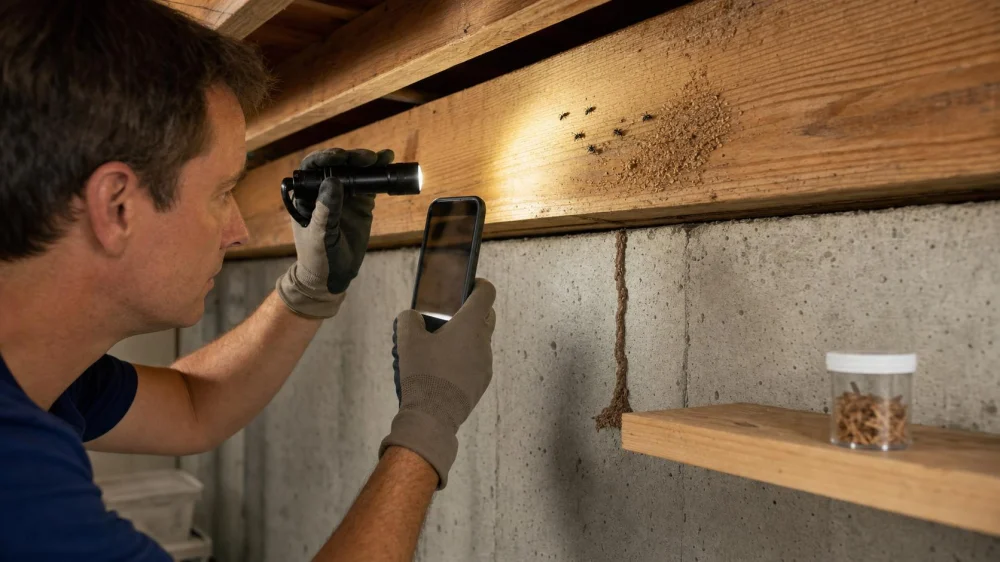
Termites: Termites consume cellulose. Subterranean termites may travel in earthen mud tubes along foundations or other surfaces. Other possible signs include shed wings, blistered or hollow-sounding wood, or concealed damage found during repairs. Termite types and signs differ by region.
One clue is not a complete diagnosis. A few ants that entered from outside do not automatically prove an indoor nest, and discarded wings require close identification.
A safe homeowner inspection checklist
- Do not disturb the main evidence. Avoid breaking open walls or damaging a suspected mud tube before it is documented.
- Take clear photos. Include close views of the insect and wings plus a wider view showing where it appeared.
- Save a sample safely. If practical, place a dead insect and loose wings in a sealed clear container. Do not handle unknown pesticide residues.
- Map the location. Note the room, date, time, weather, nearby moisture, and whether activity occurred at a window, foundation, plumbing opening, or wood surface.
- Check accessible moisture sources. Look for plumbing leaks, clogged gutters, poor drainage, damp wood, blocked vents, and firewood stored against the house.
- Stay in accessible areas. Do not enter unsafe crawl spaces, open electrical equipment, climb an unstable ladder, or cut structural wood.
When to arrange a professional inspection
Seek prompt inspection when swarmers emerge indoors, mud tubes appear on the foundation, wood seems damaged, insects recur, activity occurs during winter, or a real estate transaction is pending. Also call when the suspected area is structural or inaccessible.
For termite work, the U.S. Environmental Protection Agency advises choosing a company licensed by the state. Ask the inspector to identify the pest, show the evidence, define the treatment area, explain moisture or repair recommendations, provide the pesticide label when chemicals are proposed, and put the plan, price, warranty, and follow-up terms in writing.
Important treatment and safety notes
Do not spray the first insects you see and assume the colony is eliminated. Correct identification determines the control strategy, and surface killing may remove evidence without reaching a hidden nest. Structural termite treatment can involve specialized equipment and state licensing requirements.
If using any pesticide, use only a product registered for the target pest and site and follow its label exactly. Keep people and pets away as directed, observe reentry instructions, and never apply more than the label permits. Do not use outdoor products indoors.
Evidence note: Identification and termite-safety guidance in this article aligns with the EPA termite resource and university extension guidance on carpenter ants. Local species, building design, and state rules vary, so general visual clues cannot confirm an infestation.
Frequently asked questions
Do carpenter ants eat wood like termites?
No. Carpenter ants excavate wood to create galleries; termites consume cellulose. Both can be associated with building damage, but control methods differ.
Do piles of wings prove termites?
No. Ant swarmers also shed or lose wings. Save a sample and compare the insect's waist, antennae, and wing proportions or obtain professional identification.
Can I seal the entry hole?
Sealing exterior gaps can be useful after the pest and moisture source are understood, but sealing one visible opening may redirect hidden activity or obscure evidence. Ask the inspector about timing.
Is one carpenter ant indoors a serious problem?
Not necessarily. It may have wandered in from outside. Repeated activity, many winged ants indoors, winter sightings, moisture, or wood debris makes an indoor nest more plausible.
Next steps
Photograph the insects and building clues, save a sample, correct obvious leaks without destroying evidence, and schedule identification if activity persists or structural damage is possible. A reliable diagnosis should name the pest and connect the proposed treatment to the colony location and building conditions.




 JP Pest Services4.0 (341 reviews)
 Structural Pest Management Inc.4.0 (14 reviews)
 Eastern Pest Management5.0 (2 reviews)
 Rapid Wildlife Control5.0 (126 reviews)
 Bug Out4.0 (221 reviews)
 Go Green Pest Solutions5.0 (7 reviews)
 How to Control Termites Without Fumigation: Effective Methods for Homeowners
 How to Keep Crawlspaces Dry and Pest-Free
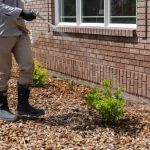 How to Use Granular Treatments Around Foundations for Effective Pest Control
 How Pest Control Differs in Humid vs Dry Climates for Effective Home Protection
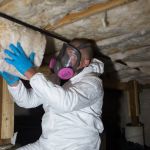 How to Control Pests in Crawl Spaces
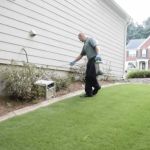 How to Prevent Pest Intrusion via Landscaping: Tips and Strategies