
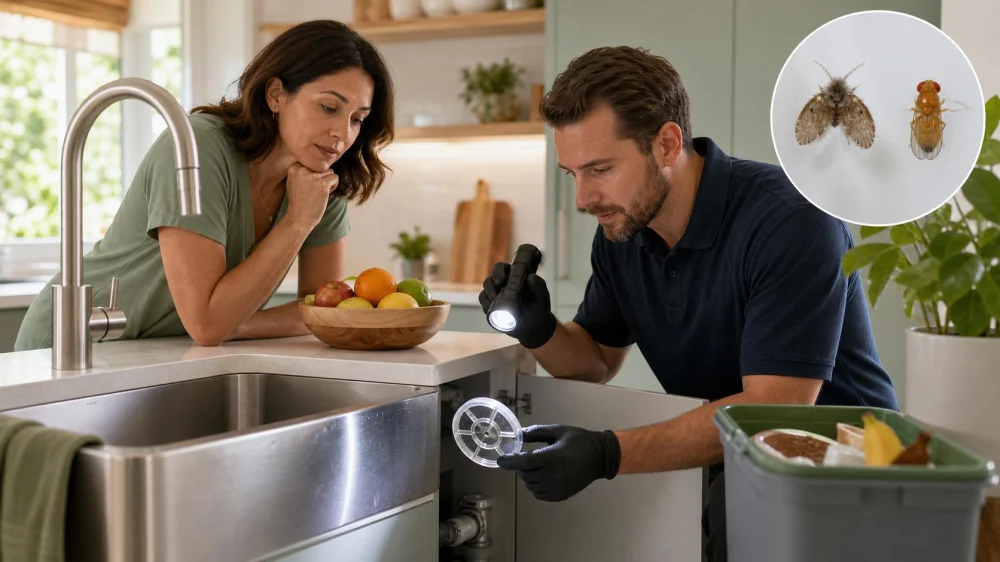
Drain Flies vs Fruit Flies: Find and Remove the Breeding Source
On this page
- Quick answer
- Compare appearance and behavior
- Map where the flies appear
- Test whether a drain is the source
- Check other moisture sources
- Find fruit-fly breeding material
- Clean drains safely
- Remove food and fermentation sources
- Use traps as monitors
- Avoid ineffective or risky shortcuts
- When to call a professional
- Prevent the next cycle
- Seven-day checklist
- Frequently asked questions
- Next steps
Quick answer
Drain flies are usually fuzzy, moth-like flies that rest on walls near wet drains, sewage leaks, or other organic slime. Fruit flies are smoother, tan to brown flies often seen around fermenting produce, recycling, beverage residue, garbage, or food spills. Appearance helps, but the breeding source is the decisive clue.
Do not treat every small fly by pouring chemicals into every drain. First map activity, inspect likely sources, and use a simple drain-cover test. Then physically remove organic buildup, correct moisture or plumbing problems, clean food residue, and monitor for at least one life cycle. Contact a pest-management or plumbing professional when the source is hidden, activity persists, or sewage is involved.

H.T. Treadway Pest Control
Spring GroveYork CountyPennsylvania
3264 Smoketown Rd, Spring Grove, PA 17362, USA
Compare appearance and behavior
Adult drain flies are commonly small, gray or tan, and covered with fine hairs. Their broad wings may look heart-shaped or roof-like when at rest. They often make short, weak flights and remain on walls near a source.
Fruit flies are usually tan, yellow-brown, or dark brown, with a compact smooth body. Some common species have noticeable red eyes, but eye color is difficult to see without magnification and is not a reliable household test by itself. Fruit flies fly more actively around ripe produce, sweet liquids, and fermentation odors.
Other small flies can complicate identification. Phorid flies often run rapidly across surfaces and can breed in decaying material or sewage. Fungus gnats are slender, dark, and commonly associated with damp potting soil. Correct identification matters because cleaning a sink will not solve a plant-soil source.
Capture a few specimens on a plain sticky card and take a close photograph. Avoid crushing every sample; an intact specimen is more useful to a pest professional.

RPM Pest Control Management LLC
ChurchvilleMonroe CountyNew York
58 E Buffalo St, Churchville, NY 14428, USA
Map where the flies appear
Note the rooms, surfaces, and time of day where activity is highest. Check kitchens, bathrooms, laundry areas, basements, floor drains, utility sinks, sump areas, mop storage, recycling, and indoor plants.
Look vertically as well as horizontally. Flies resting above a sink may come from the drain below, but they may also emerge from a leaking pipe inside a wall. Activity concentrated around a window may simply reflect adults moving toward light.
Make a dated count at the same time each day. A rough count near each suspected source is more useful than an estimate for the whole house. Mark which drains are frequently used, rarely used, or recently backed up.
Do not assume the cleanest-looking fixture is innocent. Organic film can remain below the visible drain opening, in an overflow channel, under a disposal splash guard, or along the waterline of a floor drain.
Test whether a drain is the source
At night, dry the area around a suspected drain. Place a clear cup or transparent container over the opening without pushing it into the drain. Another option is a strip of clear tape placed sticky-side down across part of the opening while leaving airflow; do not completely block a drain that must remain functional.
Check the cover in the morning for flies trapped inside or stuck beneath the tape. Repeat for several nights because adults may not emerge every night. Label each test so results are not mixed up.
A negative test does not prove the drain is clear. The source may be deeper, activity may be intermittent, or the flies may use an overflow opening rather than the main drain. Test multiple likely locations rather than treating all of them blindly.
Never seal a gas appliance vent, plumbing vent, active sewage opening, or equipment drain. If you are unsure what an opening does, ask a plumber or building manager.
Check other moisture sources
Drain-fly larvae feed in wet organic film. Possible sites include leaking drainpipes, condensate pans, clogged air-conditioning drains, dirty garbage bins, wet mop heads, septic problems, sewage backups, and stagnant water beneath appliances.
Inspect under sinks with a flashlight. Look for swollen cabinet material, water stains, odor, corrosion, or dampness. Check refrigerator drip areas, dishwasher connections, washing-machine drains, and the floor around a water heater without touching electrical components.
Rarely used floor drains can lose water from the trap, allowing odor or pests to enter. Ask a plumber or building professional how that drain should be maintained. Do not pour pesticides or improvised mixtures into plumbing.
Persistent flies from a wall, floor crack, or slab area can indicate a broken or leaking pipe. That problem requires investigation rather than surface spraying.
Find fruit-fly breeding material
Inspect ripe and damaged fruit, onions, potatoes, tomatoes, and produce stored out of sight. Check under baskets and inside reusable shopping bags. One leaking item can sustain many flies.
Rinse beverage containers before recycling and empty the recycling bin frequently. Look beneath the bin liner for syrup, wine, beer, juice, or kombucha residue. Clean bottle-return bags and reusable drink containers.
Check garbage disposal splash guards, trash-can seams, compost containers, mop buckets, bar mats, coffee grounds, wet pet food, and spills beneath appliances. Fruit flies can develop in a very small amount of fermenting material.
In a business or shared building, include beverage stations, floor mats, soda lines, janitorial closets, dumpster areas, and neighboring units in the inspection plan. Coordinate with management instead of applying products outside your authority.
Clean drains safely
Physical cleaning is central because larvae live in organic film. Follow the fixture and plumbing manufacturer’s guidance. Remove accessible strainers or stoppers, wear gloves and eye protection, and scrub reachable interior surfaces with a dedicated long-handled drain brush.
Clean the underside of a disposal splash guard only after following safe shutdown instructions. Never place a hand into a garbage disposal. If power isolation is uncertain, leave the work to a qualified person.
Flush loosened material with water at a temperature safe for the plumbing. An enzyme or microbial drain product labeled for the site may help digest remaining buildup when used exactly as directed. Product results take time and do not repair a leak.
Do not mix bleach, ammonia, acids, drain openers, or pesticides. Dangerous gases, burns, splashing, and pipe damage can result. If a drain is blocked, backs up, or smells like sewage, stop and contact a plumber.
Remove food and fermentation sources
Discard spoiled produce in a sealed outdoor container. Refrigerate ripe fruit temporarily while the infestation is being resolved. Wash produce bowls and dry them before refilling.
Empty trash and compost frequently, then wash and dry the bins. Clean spills beneath and behind small appliances. Launder damp towels and mop heads, and allow cleaning tools to dry fully.
Clean beverage residue immediately. Rinse bottles and cans, close wine and vinegar containers, wipe pour spouts, and wash reusable straws or caps. Store pet food in closed containers and do not leave wet food out longer than appropriate.
Sanitation must reach the hidden source. A spotless countertop will not stop flies breeding in residue below a refrigerator or inside a recycling bin seam.
Use traps as monitors
Sticky cards placed near suspected sources can show where adults are most active and whether numbers decline. Keep traps away from children, pets, food preparation, and places where hair or skin may contact adhesive.
A small fruit-fly lure can capture adults, but it does not remove eggs and larvae. Treat trap counts as evidence, not as the entire solution. Label traps by location and date.
Commercial ultraviolet fly units may be appropriate in some businesses when selected and positioned by a professional. They should not be placed where captured insects can contaminate food.
Continue monitoring after cleaning. Adult flies already present may remain for several days, so immediate zero activity is not a realistic test of success.
Avoid ineffective or risky shortcuts
Do not fog or spray an entire room for a few small flies. Aerosols may kill exposed adults without reaching the wet or fermenting source and can create unnecessary exposure.
Do not pour boiling water into fixtures unless the plumbing manufacturer confirms it is safe. Very hot water can damage some pipes, seals, sinks, or disposal parts and can cause burns.
Do not combine baking soda, vinegar, bleach, drain opener, or insecticide in a drain. Household chemistry experiments are not a substitute for physical cleaning and repair.
Do not tape over all drains indefinitely. Plumbing systems need appropriate venting and use, and a sealed fixture may hide a continuing leak or sanitation problem.
When to call a professional
Call a licensed pest-management professional when you cannot identify the fly, activity persists after thorough source removal, multiple units are affected, or the source appears to be inside a wall or inaccessible void.
Call a plumber for recurring backups, sewage odor, leaking drains, damaged traps, slow fixtures, or suspected broken pipes. Sewage contamination requires appropriate protective practices and may need professional remediation.
Restaurants, health-care settings, childcare facilities, and other regulated sites should follow their sanitation plan and documentation requirements. A professional can identify specimens, inspect infrastructure, and recommend labeled treatments only where needed.
Seek urgent medical advice for significant chemical exposure, breathing symptoms, or burns. In the United States, contact Poison Control for product exposure guidance using its official channels.
Prevent the next cycle
Keep drains in routine use clean according to manufacturer and facility guidance. Correct drips promptly, maintain traps and condensate systems, and dry mops and cloths between uses.
Rotate produce so older items are used first. Rinse recycling, close compost, and inspect storage areas weekly. Clean under movable appliances on a reasonable schedule.
Use screens and repair exterior gaps, but remember that indoor breeding can continue even in a well-sealed building. Sanitation and moisture control remain the foundation.
Keep a brief record of dates, locations, trap counts, cleaning, and repairs. If flies return, the record can reveal a seasonal or plumbing pattern.
Seven-day checklist
- Photograph or capture an intact fly for identification.
- Map activity by room and suspected source.
- Test selected drains for several nights.
- Inspect produce, recycling, trash, compost, and beverage residue.
- Check for leaks, backups, wet tools, and hidden moisture.
- Physically clean confirmed drains without mixing chemicals.
- Remove fermenting food sources and dry cleaned areas.
- Track sticky-card counts at the same time each day.
- Arrange pest or plumbing help if the source remains unclear.
Frequently asked questions
Does seeing flies at a sink prove they came from the drain?
No. Sinks provide water and light, so several fly types may gather there. Use identification, mapping, and a drain-cover test to locate the breeding source.
Will bleach eliminate drain flies?
Bleach may not penetrate or remove the organic film where larvae develop, and it can be hazardous when mixed with other products. Physical cleaning and correction of moisture problems are more important.
Why are flies still present after cleaning?
Adults that emerged earlier may remain, another source may exist, or hidden buildup may not have been removed. Continue monitoring and investigate if counts do not decline.
Are small flies a sign that the home is dirty?
Not necessarily. A hidden leak, one spoiled item, a little beverage residue, or an unused drain can create a source. The useful response is systematic inspection, not blame.
Can drain flies bite?
Common household drain flies are nuisance flies and are not known for biting people. Their presence can still signal wet organic material or a plumbing issue that should be corrected.
Next steps
Capture a specimen, map activity, and test only the most likely drains. Remove confirmed food or organic film sources, correct moisture, and monitor counts for a week. If identification is uncertain or activity continues, give your records and specimen photographs to a pest-management professional or plumber.
Always follow product labels and local requirements. This guide provides general prevention information and does not replace an on-site inspection.




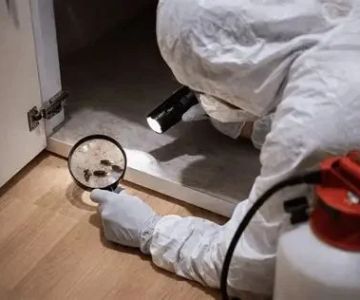

 Regan Pest Services4.0 (47 reviews)
 Greens Pest Control4.0 (14 reviews)
 Ace Walco Termite & Pest Control4.0 (292 reviews)
 Babers Bee Company5.0 (1 reviews)
 Advantage Pest Control Inc.5.0 (1 reviews)
 Skyway Pest Management Inc4.0 (64 reviews)
 How to Seal Entry Points Around Piping
 How to Keep Wasps Away From Garage Openings: Effective Tips and Solutions
 How to Use Preventative Barriers Early
 How to Control Pests Without Pesticides
 How to Prevent Pest Intrusion via Landscaping and Protect Your Home
 How to Plan Pest Control After Flood Damage: Expert Strategies for Home Safety