
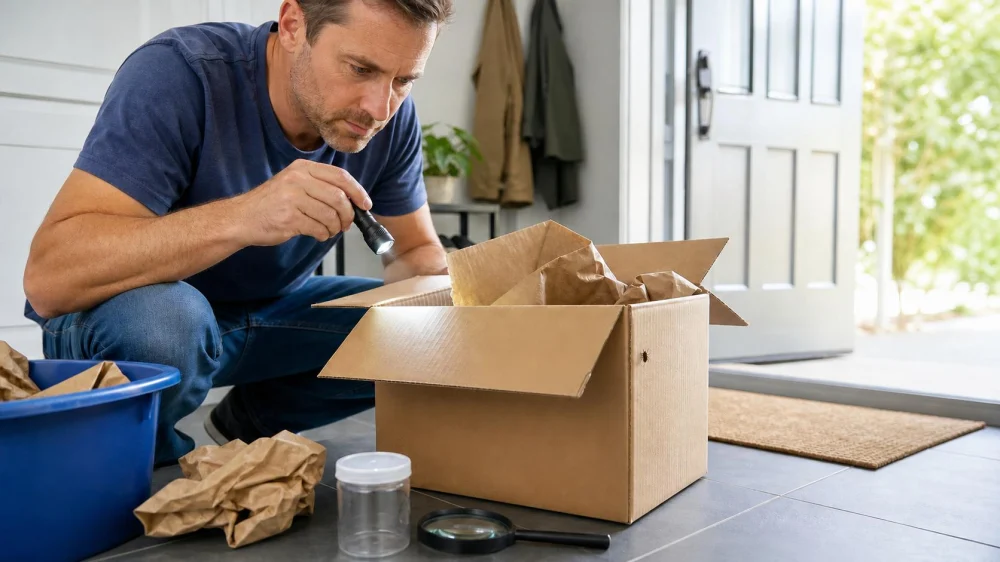
How to Check Packages for Hitchhiking Pests
In this guide
Packages, grocery boxes, secondhand furniture, potted plants, and stored belongings can occasionally transport insects or other small pests from one place to another. That possibility does not mean every delivery is contaminated or that a home needs to become a quarantine facility. A quick, consistent inspection in a well-lit spot can catch obvious signs before cardboard and packing material are distributed through the house.
Bucktown Pest Control Solutions
BurlingtonAlamance CountyNorth Carolina
2716 & 2720 Troxler Rd, Burlington, NC 27215, USA
Quick answer
Inspect incoming items in a bright, uncluttered area before carrying them into bedrooms, pantries, or storage rooms. Check seams, folds, corrugations, undersides, screw holes, and packing material for live insects, shed skins, egg cases, webbing, droppings, or damage. Open cardboard promptly, transfer clean contents when practical, and recycle or discard unwanted packaging according to local rules. If you find an unfamiliar pest, contain the item without crushing or spraying it, photograph the specimen, and seek reliable identification before choosing a response.

Brinx Professional Pest Control
North SmithfieldProvidence CountyRhode Island
540 Providence Pike, North Smithfield, RI 02896, USA
Why packages can carry pests
Many pests are good at hiding in small protected spaces. Corrugated cardboard has channels and folded edges; upholstered furniture has seams and dust covers; appliances have warm cavities; and plants provide leaves, soil, and moisture. An item may pass through warehouses, vehicles, loading areas, stores, and porches before arriving at a home. A pest can enter at any stage without the sender or recipient realizing it.
Risk varies by item and history. A sealed new product in smooth packaging is different from a used sofa stored in a garage. A box of dry food with torn inner bags deserves more attention than a factory-sealed metal object. Concentrate on plausible hiding places rather than treating every surface as equally risky.
Create a simple inspection zone
Choose a location that is easy to clean and has good light. A porch, garage threshold, utility area, or hard-floor entry can work if weather and security allow. In an apartment, use a clear section of hard flooring near the door rather than placing deliveries on a bed or upholstered chair. Keep a flashlight, disposable bag, clear container, and phone camera nearby.
The purpose is visibility, not prolonged storage. Do not block exits, building corridors, sprinklers, or shared access areas. Bring temperature-sensitive medicines, food, children’s products, and valuables inside promptly. Inspect them safely rather than leaving them exposed to heat, cold, theft, or moisture.
Signs to look for
A useful inspection looks for evidence, not just movement. Common warning signs include:
- live or dead insects in folds, tape seams, or packing material;
- small egg cases, clusters, cocoons, shed skins, or larvae;
- silk webbing or clumped material in dry-food packaging;
- pepper-like spotting, pellets, smears, or other droppings;
- chewed corners, holes, frass-like debris, or damaged inner bags;
- musty or unusual odors associated with a heavily infested item;
- movement when seams, flaps, or undersides are illuminated.
One mark rarely proves a species or infestation. Cardboard dust can resemble insect debris, and harmless outdoor insects sometimes wander onto a porch. Good photographs and an intact specimen, when safely captured, are more useful than an alarmed guess.
Inspect cardboard deliveries
- Look at the exterior first. Check crushed corners, punctures, damp areas, loose tape, and gaps along the bottom.
- Open in the inspection zone. Use care with blades so you do not damage the contents or reach blindly into a box.
- Lift packing material slowly. Examine paper folds, air pillows, foam edges, and the space beneath products.
- Check inner packages. Food bags should be intact; textiles and household goods should be examined along seams and folds.
- Remove excess cardboard. Flatten and recycle clean material promptly where local collection permits. Bag or contain suspect material until identification or disposal instructions are clear.
There is no need to unpack every ordinary delivery outdoors or to discard a useful box immediately when no risk is apparent. The aim is to prevent a buildup of shipping cartons in quiet indoor storage areas, especially near food, fabrics, or known pest activity.
Check used furniture and appliances
Secondhand items deserve a slower inspection because their storage history may be unknown. Ask where the item was kept and whether the owner noticed pest activity. For furniture, illuminate piping, seams, tufts, joints, drawer runners, screw holes, the underside, and the back. Remove drawers when this can be done without damage. For appliances and electronics, inspect external vents, feet, cord storage, and accessible panels without dismantling energized equipment.
Never bring a curbside mattress or upholstered item indoors solely because the visible surface looks clean. Some insects hide deep inside frames and fabrics, and eggs can be difficult to see. If an item cannot be thoroughly inspected, safely cleaned, or treated by an appropriate professional, declining it may be cheaper than managing an infestation.
Unplug appliances before an external inspection. Do not insert tools, liquids, dusts, or aerosols into electrical equipment. Manufacturer instructions and qualified service professionals should guide any internal access.
Handle plants and produce separately
Potted plants can carry aphids, scale insects, fungus gnats, mites, slugs, or other organisms associated with foliage and soil. Examine leaf tops and undersides, stems, the rim and drainage holes of the pot, and the surface of the growing medium. Keeping a new plant apart from an established indoor collection for a reasonable observation period can make detection easier, but plant needs for light, water, and temperature still apply.
Fresh produce may arrive with harmless field debris or an occasional insect. Follow food-safety guidance for washing and storage; do not apply household pesticides to food. Discard produce that is spoiled or extensively damaged. Dry goods with webbing, larvae, or holes in the inner package should be contained so they do not spread into pantry shelving, then returned or discarded according to store and local waste policies.
What to do if you find a pest
- Pause the unpacking. Keep the item in the inspection area and prevent children or pets from handling it.
- Contain without spreading. Close the box or place a small item in a sturdy clear bag or lidded container.
- Document the evidence. Take focused photos beside a common object for scale without putting yourself at risk.
- Preserve a specimen when safe. A sealed container can help a pest professional, local cooperative extension service, or other qualified identifier.
- Inspect the immediate path. Check where the item sat and where packaging was carried.
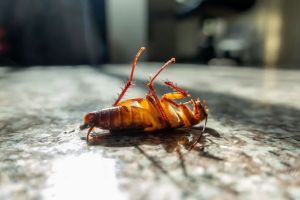
- Seek identification. Management depends on the species; a pantry moth, carpet beetle, cockroach, termite, and bed bug require very different responses.
Contact the seller when appropriate and retain order details and photographs. If the pest may be regulated, invasive, or connected to agricultural material, follow the directions of state or federal agriculture authorities. Do not mail or transport a live specimen unless an authority specifically instructs you to do so.
Build a practical routine
Consistency matters more than an elaborate ritual. Open deliveries within a reasonable time, avoid storing piles of corrugated cardboard, keep pantry foods in sound packaging or suitable containers, and vacuum or wipe the inspection area when debris appears. Rotate stored boxes so forgotten items do not remain undisturbed for years.
For frequent deliveries, designate one shelf or mat for unopened items. Keep it away from pet food and upholstered furniture. Residents of multi-unit buildings should follow property rules for recycling and report recurring pest activity to management, because a problem may extend beyond one apartment.
What to avoid
- Do not spray every package “just in case.” Unnecessary pesticide use can expose people, pets, food, and belongings without addressing a real target.
- Do not use outdoor pesticides indoors. Product labels specify where and how a pesticide may legally and safely be used.
- Do not create homemade heat treatments. Ovens, space heaters, hot cars, and improvised enclosures can damage property or cause fires without reliably treating an item.
- Do not carry a suspect item through the home uncovered. Contain it before relocation.
- Do not identify from color alone. Size, shape, behavior, location, and a clear specimen all matter.
- Do not combine pesticides or use more than the label directs. If treatment is warranted, follow the label and consider a licensed professional.
Frequently asked questions
Should every delivery be opened outside?
No. Use a proportional routine based on the item, condition, and history. A bright hard-floor area near the entry is sufficient for many ordinary packages. Protect sensitive contents from weather and theft.
Can bed bugs live in cardboard?
Bed bugs can hide in narrow cracks and may be transported with belongings, but a cardboard box alone does not prove their presence. Inspect seams and nearby contents and obtain qualified identification for suspicious evidence.
Is freezing a package an effective treatment?
Do not assume a household freezer, outdoor temperature, or brief exposure will control an unknown pest. Required temperature and duration vary, and some contents may be damaged. Identify the pest and use validated guidance.
What should I do with a single outdoor insect on a box?
Remove or contain it if safe, inspect the package, and look for additional evidence. One accidental hitchhiker outside does not necessarily indicate an indoor infestation.
When should I call a pest professional?
Seek help when identification is uncertain, multiple signs appear, the item was already distributed through the home, activity continues after removal, or the suspected pest is difficult to manage. Ask about licensing, inspection findings, and an integrated plan before treatment.
Keep inspection proportional
A package inspection should be a brief prevention habit, not a source of constant anxiety. Use good light, focus on seams and sheltered spaces, remove excess packaging, and keep suspect evidence contained. The most important step after finding a pest is accurate identification. Once you know what is present—and whether it is truly established indoors—you can choose a response that fits the risk without unnecessary chemicals or disruptive guesswork.



 Pest Guard Exterminating4.0 (70 reviews)
 Bee-Z Pest Control5.0 (3 reviews)
 Arrow Exterminators5.0 (287 reviews)
 Pestech Pest Solutions4.0 (97 reviews)
 Viking Pest Control4.0 (122 reviews)
 Elite Pest and Termite Control, LLC5.0 (229 reviews)
 How to Use Low Toxic Baits in Sensitive Zones
 How to Use Natural Oils for Pest Prevention
 How to Keep Crawlspaces Dry and Pest-Free
 How to Prevent Pest Growth in Basements – Effective Solutions and Tips
 How to Monitor Pest Conditions in Walls
 How to Seal Entry Points Around Piping: Effective Methods for Home Protection