Mosquito Water Check: Empty, Scrub, Cover, or Treat
On this page
- Quick answer
- Walk a weekly inspection route
- Empty and scrub movable containers
- Cover stored water tightly
- Treat only water that cannot be removed
- Check indoor water sources
- Separate containers from drainage problems
- Know when to call for help
- Mosquito water checklist
- Frequently asked questions
- Sources and evidence notes
- Conclusion and next steps
Quick answer
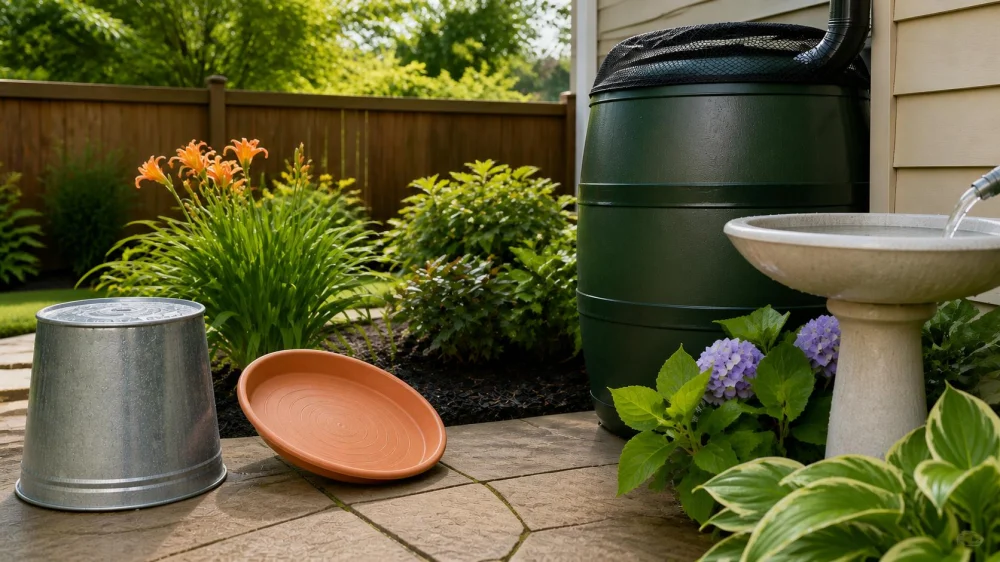
Once a week, inspect indoors and outdoors for anything holding water. CDC advises emptying and scrubbing, turning over, covering, or throwing out containers such as buckets, planters, toys, birdbaths, flowerpot saucers, tires, small pools, and trash containers. Scrubbing matters because mosquito eggs can remain attached near the waterline.
Cover water-storage containers tightly or screen openings with mesh too small for an adult mosquito. Use a label-approved larvicide only for standing water that cannot be dumped, drained, removed, or covered and will not be used for drinking. Never guess a dose or put a pesticide in water contrary to its label.

Bed Bug Busters By Ellington Management LLC
VernonCapitol Planning RegionConnecticut
655 Talcottville Rd, Vernon, CT 06066, USA
Walk a weekly inspection route
Use the same route every week and after rain, irrigation, or outdoor events: front entry, side yards, gutters visible from the ground, patio, garden, play area, storage, bins, vehicle covers, drains, and backyard. Indoors, check plant saucers, vases, utility rooms, pet areas, and rarely used fixtures.
Look for small volumes as well as obvious puddles. A bottle cap, folded tarp, toy recess, clogged gutter, wheelbarrow, umbrella base, corrugated drain extension, or equipment cover can hold enough water for mosquito development. Photograph recurring sources and assign responsibility for emptying or repair.
Empty and scrub movable containers
Pour water onto a suitable permeable area where it will not form another puddle, enter a building, or create a slip hazard. Scrub the inner walls and waterline, rinse, and let the item dry when appropriate. Turn containers upside down or store them under cover so they cannot refill.
Refresh birdbaths and pet water using safe cleaning practices appropriate to the animal, and keep drinking containers free of pesticide. Dispose of damaged items that cannot drain. For tires, bulky waste, or illegally dumped material, use local disposal services rather than moving the problem to another property.
Cover stored water tightly
Rain barrels, cisterns, buckets, and other necessary storage should have secure lids without gaps. CDC advises wire mesh with openings smaller than an adult mosquito when a container lacks a solid lid. Inspect screens around fittings, overflow paths, and downspouts because tears and loose edges can create entry points.
Keep lids seated after every use and remove water that pools on top. Check that hoses, taps, and overflow lines do not create nearby puddles. A decorative cover that leaves ventilation gaps may not block mosquitoes.
Treat only water that cannot be removed
CDC says homeowners may use larvicides for standing water that cannot be covered, dumped, or removed and is not used for drinking. Products can come as dunks, tablets, bits, pellets, granules, briquettes, or liquids. The pesticide label determines the permitted site, amount, application method, reapplication interval, storage, and safety precautions.
Do not assume “natural” means unrestricted, crumble a product to estimate a dose, or combine larvicides. Protect children, pets, fish, pollinators, and water sources exactly as the label directs. Contact the manufacturer, local mosquito-control district, or a licensed professional when the site does not clearly match the label.
Check indoor water sources
Mosquitoes that enter through doors or damaged screens can rest in dark humid places and lay eggs indoors. Empty and scrub vases, plant saucers, buckets, and other water-holding items weekly. Repair door and window screens and avoid leaving exterior and garage doors propped open.
Fix leaks and manage persistent humidity rather than relying only on spray. If mosquitoes remain after entry points and water sources are corrected, CDC says an indoor insecticide or pest professional may be considered. Use indoor products only where and how the label permits, with required ventilation and reentry precautions.
Separate containers from drainage problems
A container can usually be emptied, but a repeatedly flooded low spot, damaged drain, septic problem, blocked public catch basin, or unsafe roof gutter may require property maintenance or public works. Do not climb onto roofs, enter confined spaces, open utility structures, or alter public drainage.
Record the location, dates, rainfall, duration, and photos from a safe place. Contact the property manager, local mosquito-control program, health department, public works agency, arborist, roofer, plumber, or drainage professional according to the source. CDC cautions against drilling, filling with concrete, or adding gravel to tree holes without appropriate guidance because those actions can harm the tree or fail to stop water.
Know when to call for help
Contact local mosquito control for persistent high activity, inaccessible standing water, suspected public sources, or guidance during a disease outbreak. A licensed pest professional can inspect complex properties and use products under the label. Ask for the target mosquito, source findings, product label, application area, precautions, and follow-up plan.
Home source reduction lowers breeding opportunities but cannot eliminate every mosquito in a neighborhood. Pair it with EPA-registered repellent as directed, protective clothing, screens, and current local public-health advice.
Mosquito water checklist
- Walk the same indoor and outdoor route weekly.
- Repeat after rain, irrigation, and outdoor events.
- Empty and scrub container walls and waterlines.
- Turn over or discard unused water-holding items.
- Cover stored water with a tight lid or fine mesh.
- Keep drinking water free of larvicide.
- Use pesticide only on a matching label site.
- Repair screens, leaks, gutters, and drainage safely.
- Document recurring or inaccessible sources.
- Call local mosquito control when the source exceeds DIY scope.
Frequently asked questions
Why scrub after dumping the water?
Mosquito eggs can remain attached to container walls, so emptying alone may leave them behind.
How often should I check?
CDC recommends a weekly routine; also inspect after rain or anything that may refill containers.
Can I put larvicide in any puddle?
No. Use it only on sites permitted by the label, generally water that cannot be dumped, drained, removed, or covered and is not for drinking.
Is a rain-barrel lid enough?
Only if it closes tightly and all openings, overflows, and screens block adult mosquitoes.
Should I drill a tree hole to drain it?
No. CDC warns that drilling can damage the tree. Seek qualified tree guidance.
Will source reduction stop every mosquito?
No. It reduces local breeding and should be combined with bite prevention and community control.
Sources and evidence notes
The U.S. Centers for Disease Control and Prevention’s Mosquito Control at Home guidance supports weekly emptying and scrubbing, turning over, covering or discarding containers, tight storage covers, fine mesh, screen repair, and indoor source control. CDC’s Larvicides resource limits homeowner treatment to appropriate non-drinking water that cannot be removed or covered and stresses label compliance.
Local mosquito species, disease activity, pesticide rules, and public programs vary. Follow product labels and current local public-health directions.
Conclusion and next steps
Make mosquito control a weekly water-management habit: empty and scrub what moves, turn over or discard what is unnecessary, cover stored water, and treat only an eligible site exactly by label. Escalate structural, public, and inaccessible sources to the right professional, and continue personal bite prevention.



 Dubs Pest Control4.0 (26 reviews)
 AntEco Pest Control4.0 (69 reviews)
 Ehrlich Pest Control4.0 (240 reviews)
 Eco Pest Solutions4.0 (86 reviews)
 Bed Bug Specialist5.0 (10 reviews)
 Cowleys Pest Services5.0 (303 reviews)
 How to Keep Crawlspaces Dry and Pest-Resistant for a Healthy Home
 How to Use Tamper-Resistant Bait Stations: A Guide for Effective Pest Control
 How to Maintain Pest-Free Landscapes Year-Round: Expert Guide
 How to Keep Crawlspaces Ventilated & Pest-Free
 How to Use Diatomaceous Earth for Safe Pest Control
 How to Use Preventative Barriers Before Pest Season