Pest Control Product Labels: Read Before You Buy or Apply
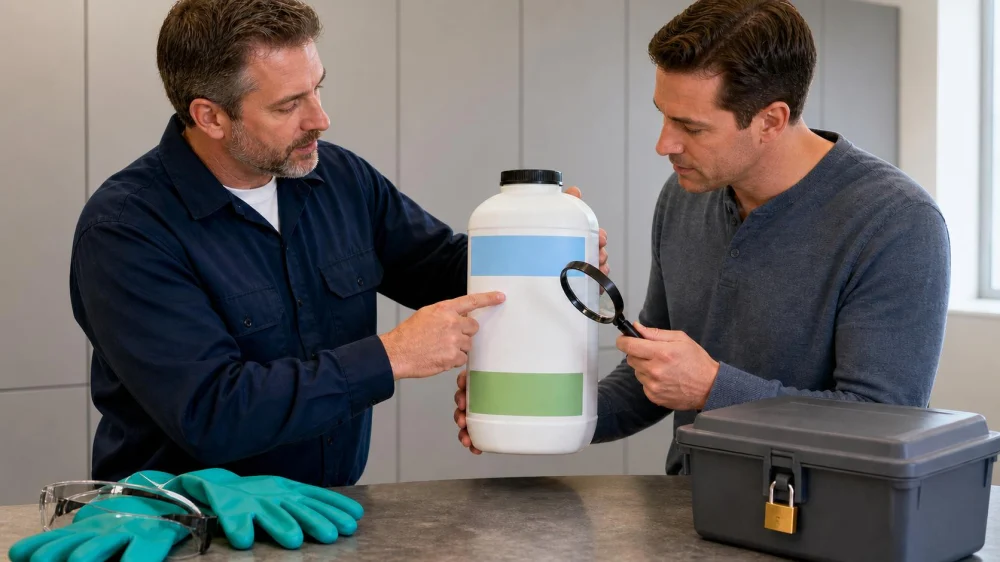
A pesticide label is not ordinary marketing copy. In the United States, it defines where, how, how much, how often, and by whom a registered product may be used, along with hazards, protective steps, storage, disposal, and first aid. Reading the entire label before purchase can prevent choosing a product that does not list the pest, site, or application you actually have.
Quick answer
Before buying or opening a pest-control product, confirm the exact pest and intended site appear on the label. Read active ingredients, signal word, hazards, directions, protective equipment, ventilation, reentry, application limits, storage, disposal, and first aid. Use only the labeled amount and method. Never apply an outdoor product indoors, transfer pesticide into another container, or assume more product works better. Keep the original label with the container and contact appropriate emergency help after an exposure.

Triangle Pest Control
Holly SpringsWake CountyNorth Carolina
108 Thomas Mill Rd #202, Holly Springs, NC 27540, USA
Identify the pest and site first
Different insects, rodents, fungi, weeds, and other organisms require different controls. A product labeled for ants may not cover termites, and a product for one ant species or outdoor mound may not apply to an indoor trail.
Confirm the site as precisely as the label requires: indoor crack and crevice, food-storage area, mattress seam, lawn, ornamental plant, vegetable garden, pet premises, building perimeter, or another listed location. “Around the house” does not automatically mean inside living space.
Consider prevention and nonchemical control first: remove food and water, repair leaks, seal entry points, reduce clutter, use sanitation, and choose appropriate physical controls. Misidentification can waste money and increase exposure.

Read the front panel
Find the product name, formulation, active ingredient and percentage, net contents, EPA registration number when applicable, and the signal word. Signal words communicate acute hazard categories but do not rank every long-term, environmental, or misuse risk.
Read precautionary statements for hazards to humans and domestic animals, environmental hazards, physical or chemical hazards, and required protective equipment. Some products may harm fish, pollinators, plants, pets, or surfaces even when the target use seems routine.
Check whether the product is ready-to-use, a concentrate, bait, dust, aerosol, fogger, granule, trap, or treated article. Similar brand names can cover different formulations with different directions.
Match directions to the job
The U.S. Environmental Protection Agency explains that pesticide labels are legally enforceable and that using a product inconsistently with its labeling violates federal law. Read all referenced booklets and attached labeling before use.
Confirm the target pest, application site, rate, preparation, equipment, placement, frequency, maximum number of applications, interval, ventilation, reentry time, and any harvest or animal restrictions. Follow “do not” statements exactly.
If your situation is not listed, do not improvise. Contact the manufacturer, state pesticide agency, cooperative extension, or a licensed pest professional for appropriate guidance.
Protect people, pets, food, and belongings
Remove or protect children, adults, pets, pet toys, bedding, dishes, food, utensils, and food-preparation items exactly as the label directs. Birds, fish, reptiles, amphibians, cats, dogs, and small mammals can have different sensitivities.
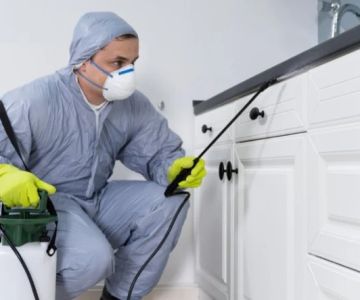
Wear the labeled gloves, clothing, eye protection, or respiratory equipment. “A mask” is not a substitute for a specific required respirator. If you cannot obtain or use the required protection, do not apply the product.
Use only the ventilation and reentry procedure on the label. Do not guess when a treated room is safe, and do not place bait where a child or pet can reach it.
Measure without improvising
Use the exact labeled rate and an appropriate dedicated measuring device when required. Household food spoons and cups should not be used. Do not double a dose, mix different pesticides, or combine a pesticide with a cleaner unless the label specifically directs it.
Prepare only the amount needed. Check sprayers, bait stations, applicators, hoses, and nozzles for compatibility, leaks, and calibration. Mix in the location and sequence the label specifies.
Keep bystanders away and stay with an open container. If interrupted, close it securely and return it to safe storage before leaving.
Store and dispose as labeled
Keep pesticide in its original container with the complete readable label and child-resistant closure. Never move it into a beverage, food, medicine, or unmarked container. Store locked, upright, dry, and separate from food, feed, seed, medicine, and pet supplies within the labeled temperature range.
Inspect for leaks, corrosion, swelling, damage, or an unreadable label. Place a damaged container in secondary containment without obscuring information and contact local authorities or the manufacturer for instructions.
Follow label disposal directions and local household hazardous-waste rules. Do not pour pesticide into a drain, toilet, storm sewer, gutter, soil, or waterway. Never reuse an empty pesticide container.
Prepare for exposure or a spill
Before application, know where clean water, the label, a phone, and emergency contacts are. The first-aid section may give different instructions for eyes, skin, inhalation, or swallowing. Follow it and obtain professional help.
In the United States, call 911 for trouble breathing, unconsciousness, seizures, severe symptoms, or immediate danger. Poison Control can be reached at 1-800-222-1222 or through its official service for human exposures. Contact a veterinarian or animal poison service promptly for pet exposure.
For a spill, keep people and animals away, stop the source only if it is safe, avoid spreading material, and follow label and local emergency instructions. Do not wash pesticide into drains or soil.
Frequently asked questions
Does an EPA registration number mean a product is harmless?
No. It means EPA evaluated registration data and approved labeled uses. Safety depends on following the label and controlling exposure.
Can I use an outdoor spray indoors?
No, unless the label specifically lists that indoor site and method.
Is twice the amount more effective?
Do not exceed the label. More can increase hazards, residues, damage, and legal violations without improving control.
Can I keep diluted pesticide in a drink bottle?
Never. Keep products in labeled pesticide containers and follow preparation and storage directions.
Next steps
Photograph the pest from a safe distance, identify the site, and review prevention options. At the store, read the complete label before purchase. If it matches the pest and site, plan protection, measuring, ventilation, storage, and disposal before opening it.
Use the EPA’s Introduction to Pesticide Labels and Do’s and Don’ts of Pest Control for current federal guidance.



 Essential Pest Control4.0 (19 reviews)
 Bob the Bug Guy5.0 (15 reviews)
 PDQ Pest Control4.0 (48 reviews)
 Orkin4.0 (1303 reviews)
 Mosquito Joe of Chattanooga4.0 (32 reviews)
 Ecoguard4.0 (104 reviews)
 How to Use Natural Oils for Pest Prevention
 How to Inspect for Pests Around Plumbing Lines: A Step-by-Step Guide
 How to Use Smart Sensors for Insect Detection: A Modern Approach
 Firewood Storage and Pest Prevention: Distance, Elevation, and Inspection
 How to Effectively Deal With Pest Infestations in Subgrades | PestControlHub
 How to Keep Pests Out of Roof Overhangs