
Firewood Storage and Pest Prevention: Distance, Elevation, and Inspection
On this page
Quick answer
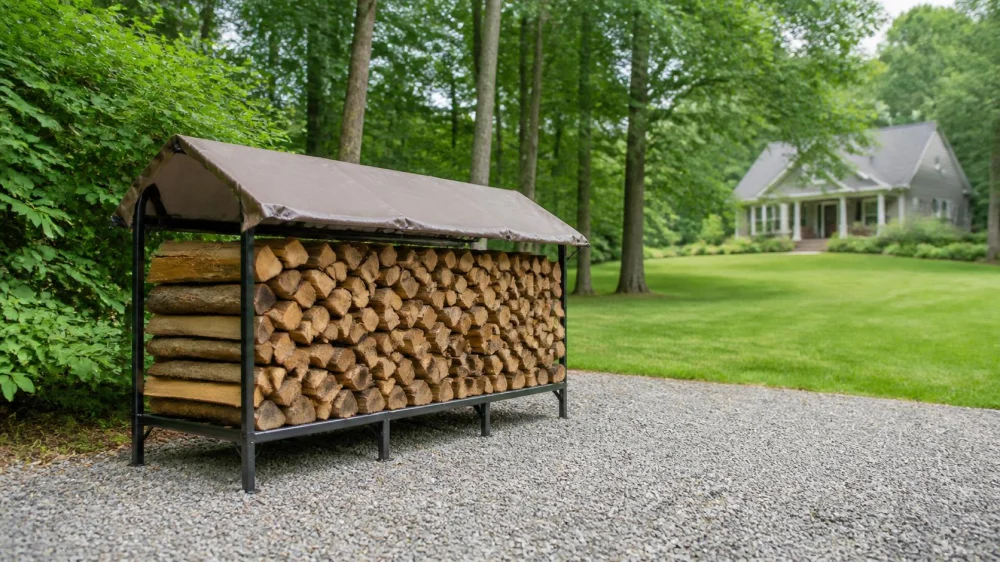
Store firewood outdoors, off the ground, in a stable stack with airflow and practical distance from the home. CDC rodent-prevention guidance uses 100 feet from the home and at least 1 foot above ground as reference measures, but lot size, fire code, weather, accessibility, and local rules may require a different safe plan. Bring in only the wood you expect to burn soon, and inspect each piece outdoors.
Do not spray firewood with a pesticide unless the product label explicitly allows that exact use. Burning treated wood can create additional hazards.

Fast Pace Spiders and Wasp Control, LLC
8606 Ira Rd, Ira Township, MI 48023, USA
Choose the storage location
A stack against siding, under a window, beside a door, or next to utility penetrations can give pests shelter close to possible entry points. Choose a well-drained location that does not block exits, equipment access, paths, vents, meters, or fire department access.
- Check local fire, building, rental, and homeowners association rules.
- Keep the stack away from structures when the property permits.
- Avoid low spots where rainwater collects.
- Do not stack over septic, drainage, or utility access.
- Keep vegetation trimmed enough to inspect around the pile.
Build a stable raised stack
Use a sound rack, pallet system, or other support suitable for the weight and local conditions. Elevation improves airflow and makes it harder for some pests to shelter unseen, but a narrow or overloaded stack can tip.
- Level and stabilize the base.
- Place larger, regular pieces at the bottom.
- Keep the stack height within the rack's design.
- Do not let children climb or play around it.
- Rebuild sections that lean, settle, or shift.
Keep wood dry without trapping moisture
Protect the top from precipitation while leaving sides open enough for air movement, unless local weather calls for a different system. A cover wrapped tightly to the ground can hold moisture and conceal insects, rodents, and decay.
Rotate older dry wood forward and avoid continually burying it under new deliveries. Do not store visibly wet wood in a sealed indoor space.

Inspect before carrying wood indoors
Look over bark seams, cut ends, hollows, and the surface touching the rack. Signs can include live insects, egg masses, mud tubes, webbing, fresh boring dust, galleries, droppings, nesting material, or gnaw marks. Shake or brush loose debris outdoors only when doing so is safe.
Do not transport firewood over long distances; local restrictions may apply because wood can move invasive pests. Buy and burn local wood as authorities direct.
Limit indoor storage time
Indoor warmth can activate insects that were inactive outside. Carry in a small amount shortly before use and keep it away from food, upholstered furniture, bedrooms, and damp areas. Use a washable holder that contains bark and debris.
Remove unused wood if pest activity appears rather than allowing it to remain beside the fireplace for days.
Respond to pest evidence safely
Photograph the wood and stack from a safe distance, note where the wood came from, and identify whether activity is confined to a few pieces or extends to the structure. Contact a qualified pest professional or local extension or invasive-species authority when identification matters.
Do not assume holes in firewood mean the house is infested, but do not ignore evidence on structural wood. Keep any pesticide, trap, or treatment within its label and away from children, pets, food, and fire.
Important limitations
This is general U.S. prevention guidance, not structural, fire-safety, invasive-species, or pesticide advice. Climate, pests, wood species, property size, wildfire conditions, and codes vary. Local fire officials and pest or forestry authorities may require stricter practices.
Evidence notes
EPA integrated pest management starts by reducing food, water, shelter, and access. CDC rodent guidance specifically recommends moving woodpiles away from the home and raising them. The inspection and rotation steps make those environmental controls observable and maintainable.
FAQ
How far should firewood be from the house?
CDC uses 100 feet as rodent-prevention guidance, but use the safest feasible distance consistent with local fire and property rules.
How high should firewood be off the ground?
CDC guidance uses at least 1 foot. The support must also be stable and rated for the load.
Should I cover the whole pile?
Protecting the top while allowing side airflow often balances rain and drying, but adapt to local weather and fire guidance.
Can I spray insecticide on firewood?
Only if the label explicitly permits the exact use; never improvise a treatment for wood that will be burned.
How much wood should I keep indoors?
Bring in only what you expect to use soon and inspect it outside first.
Next steps
Check local fire and property rules, inspect the current location, stabilize and raise the stack, improve airflow, and create a routine for bringing in only inspected wood. Document persistent activity for a qualified professional.






 Petti Pest Control4.0 (71 reviews)
 Mountain Empire Wildlife & Pest Control4.0 (37 reviews)
 Cedar Tree Turf & Pest Solutions4.0 (32 reviews)
 YourScape Fertilization and Lawn Care5.0 (7 reviews)
 Hodge Pest Control, Inc4.0 (40 reviews)
 Pura Pest Control4.0 (52 reviews)
 How to Detect Termites Before Structural Damage Occurs
 How to Use Tamper-Resistant Bait Stations: A Guide for Effective Pest Control
 How to Remove Bees Without Killing Them
 How Pest Biology Affects Control Strategy
 Why Pests Are More Active After Rain
 How to Use Electronic Pest Control Devices Effectively at Home