Pest Sighting Photo Guide: Capture Evidence Without Contact
Table of contents
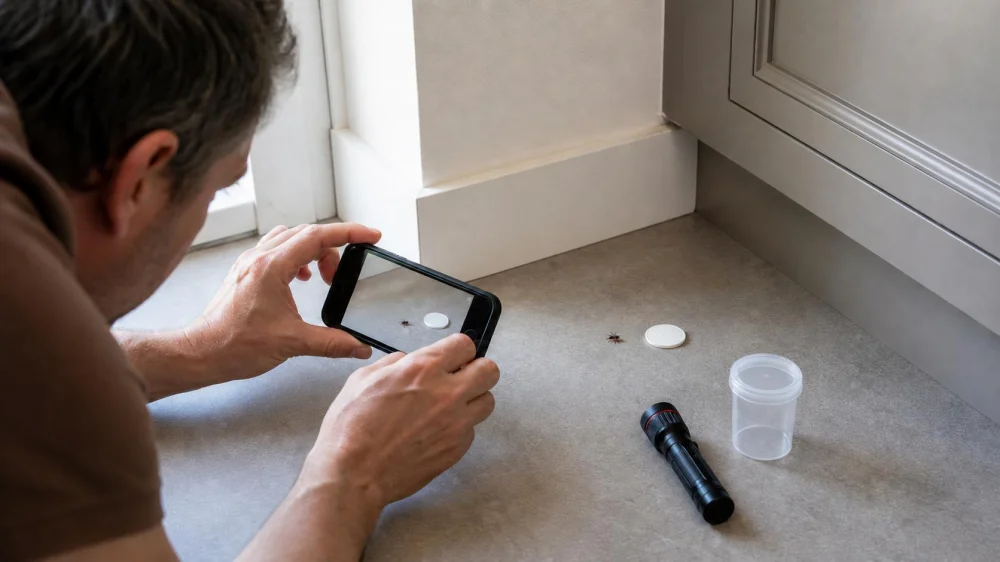
Quick answer: Photograph a pest only from a distance that feels safe. Take one wide image showing the location, one closer image using zoom rather than physical contact, and a separate size reference when practical. Record the date, room, activity, and nearby damage. Do not chase, touch, trap, or disturb an unknown, venomous, stinging, or wildlife-related pest just to obtain a better picture.

Tomlinson Bomberger Lawn Care & Pest Control
HarrisburgDauphin CountyPennsylvania
1001 Peiffers Ln Unit A, Harrisburg, PA 17109, USA
Start with distance and safety
A useful photo never justifies a bite, sting, fall, or contamination event. Keep children and pets away, and never reach behind an appliance, inside a wall void, under furniture, or into a nest area. Let a moving pest leave instead of blocking it.
Use camera zoom from a stable position. Improve room lighting only if you can do so without moving closer. Do not poke, herd, or spray the pest for a better picture; that can scatter pests, obscure evidence, or create exposure concerns. The EPA's integrated pest management overview explains how monitoring and information support appropriate control decisions.
Capture useful evidence
Take a short sequence instead of relying on one perfect image. The following checklist gives a pest professional or property manager more context while keeping the task simple:
- Wide view: show the area and the pest's position relative to a door, drain, baseboard, plant, light, or food source.
- Medium view: include any trail, web, nest material, droppings, shed wings, moisture, or damaged packaging.
- Closer view: zoom in on shape, color, wings, antennae, or markings without crossing your safe boundary.
- Size reference: photograph a ruler or plain object on the surface only after the pest moves away.
- Angles: when safe, take top and side views. Change the camera angle rather than opening a container.
Tap the subject to focus, brace your elbows, and take several frames. Skip flash if it creates glare or agitates an insect. Stop recording if following the pest requires climbing, reaching, or entering an unsafe space.
Record context without losing privacy
Pair photos with a brief log: date, approximate time, location, number seen, direction of travel, and nearby water, food, cardboard, firewood, vegetation, or plumbing gaps. Record later cleaning or sealing so repeat sightings can be compared.
Before sharing, crop or blur faces, mail, labels, access codes, screens, and family photographs. Keep the original privately, but send only what is needed. Use a location-based filename rather than a person's name or full address.
What to do after the photo
Leave the area undisturbed when it may need inspection. Document trails, damaged packaging, entry gaps, or nest material before cleaning or repair. Isolate contaminated food from clean food and follow local disposal guidance.
Specimen collection is optional. Never collect a stinging insect, biting arthropod, bat, rodent, snake, unknown wildlife, or an animal acting unusually. Ask a professional first; a clear image may be enough.
Send the images and log before a service visit, then ask what can be identified and what inspection or precautions are needed. The EPA's service-selection guidance recommends discussing the problem, treatment choices, product information, and safety steps.
Limitations and urgent situations
A photograph may not support a reliable species identification. Lighting, motion, compression, and life stage can distort key details. Treat image-based identification as provisional until a qualified professional examines the evidence or site.
Keep away from active wasp or hornet nests, swarms, venomous or unknown animals, rodents, bats, and wildlife in occupied rooms. If a person or pet has been bitten, stung, exposed to pesticide, or is having trouble breathing, prioritize emergency medical, veterinary, poison-control, or local emergency guidance over documentation. For bats or other animals that can present a rabies concern, avoid release, capture, or cleanup until public-health or animal-control authorities advise what to do.
Frequently asked questions
Should I put a coin next to the pest for scale?
Only after the pest has moved away and only if placement is safe. A ruler or plain object photographed separately on the same surface can provide scale without approaching the animal.
Can an identification app replace an inspection?
No. Apps can suggest possibilities, but images may omit the features needed to distinguish species or confirm the source. Use the result as a lead, not a treatment decision.
Should location services remain in the photo?
That is a privacy choice. Location metadata can help your own records, but remove it before public posting or broad sharing if it reveals a home, workplace, school, or sensitive site.
What if the pest disappears before I take a photo?
Record the time, place, direction of travel, approximate size, and visible features from memory. Photograph the location, entry gap, damage, or droppings without reaching into the hiding place.
Next steps
Save the best wide, medium, and close images with the observation log. Watch from a safe distance for repeat activity. Send the evidence to a property manager or pest professional, ask what can be identified confidently, and request an inspection plan before choosing treatment. Documentation supports informed pest management; it never justifies physical risk.

 AmeriGuard Extermination4.0 (109 reviews)
 Lawnworks Of Joliet, Inc.4.0 (627 reviews)
 Orkin4.0 (1349 reviews)
 Maynard Pest Management LLC4.0 (23 reviews)
 Upstate Pest Solutions5.0 (1 reviews)
 See Pest Control4.0 (20 reviews)
 How Crowded Cities Affect Pest Populations
 How to Safely Deal with Dead Rodents in Your Home
 How to Treat Pest Infestations in Attic Insulation
 How to Check Packages for Hitchhiking Pests
 How to Inspect for Pests Around Plumbing Lines: A Step-by-Step Guide
 How to Safely Use Fumigation Methods