
Cockroach Activity Log: Map Hotspots Before Treatment
On this page
- Quick answer
- Confirm that the pest may be a cockroach
- Record sightings consistently
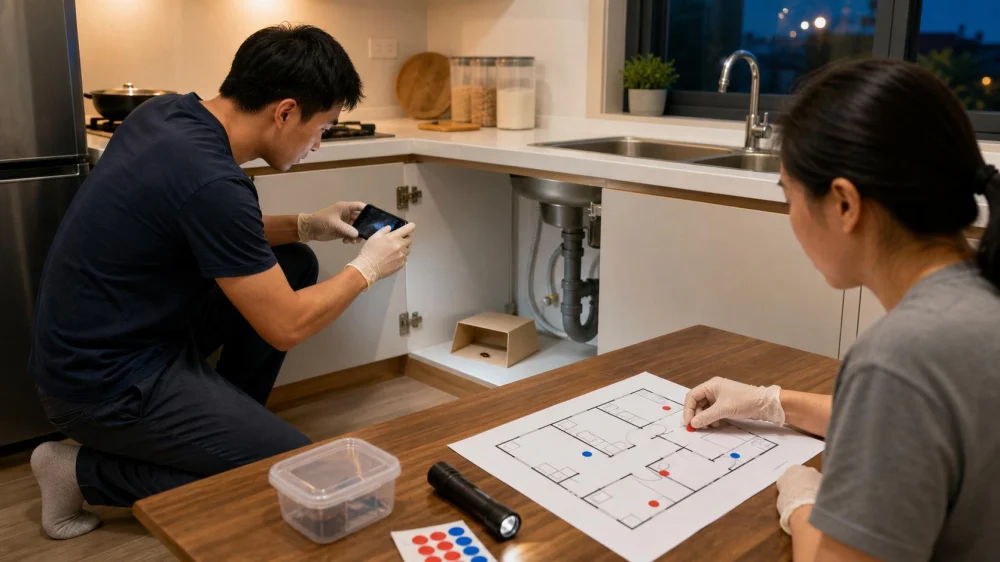
- Build a room-by-room hotspot map
- Use monitors only as directed
- Remove food and clutter clues
- Track moisture and entry points
- Coordinate in multi-unit housing
- Keep pesticide use label-based
- Know when to call a professional
- Seven-day logging checklist
- Frequently asked questions
- Sources and evidence notes
- Conclusion and next steps
Quick answer
Make a cockroach activity log before treatment by recording the date, time, room, exact surface, number seen, life stage if known, nearby food or water, and a photo when safe. Mark repeated sightings on a simple floor plan and number any monitoring traps so results match locations. Clean crumbs and spills, store food, repair leaks, and reduce clutter while tracking. Do not spray unidentified insects or combine products; follow the pesticide label or use a licensed professional.
This guide is for household observation and prevention in the United States. It does not identify a specimen from a description or replace a qualified pest-management inspection.
Confirm that the pest may be a cockroach
Do not base a chemical treatment on one fast-moving brown insect. Beetles, crickets, true bugs, and other insects may be mistaken for cockroaches, especially after a brief sighting.
If safe, take a clear photo from a distance and note approximate size, color, wing length, body shape, and where it appeared. Do not handle the insect with bare hands. A pest professional, state or county extension service, or other qualified identifier can help confirm the specimen.
Possible cockroach evidence can include live or dead insects, shed skins, egg cases, spotting or droppings, and repeated activity near protected food or moisture sources. These signs are not all equally specific; document rather than guessing.

Record sightings consistently
Use a notebook or simple spreadsheet with the same fields for every observation:
- date and time;
- room and exact location, such as under the sink or beside the refrigerator;
- number of insects seen;
- adult, small immature insect, egg case, or unknown;
- alive, dead, trapped, or photographed;
- nearby food, water, warmth, cardboard, trash, drain, crack, or appliance; and
- recent cleaning, plumbing, delivery, pesticide, or building-maintenance activity.
A consistent log shows patterns better than memory. Avoid declaring success after one quiet night or failure after one new sighting; interpret the trend with the treatment timeline and professional guidance.
Build a room-by-room hotspot map
Sketch the kitchen, bathrooms, laundry, utility areas, pantry, basement, and connected rooms. Mark appliances, sinks, plumbing penetrations, cabinets, trash, pet feeding stations, floor drains, and shared walls.
Give each location a short code such as K1 for the first kitchen point and B1 for a bathroom point. Use the same code in photos, log entries, and monitoring records. Do not put personal information or an exact home address on a sheet that will be shared widely.
Hotspots are repeated clusters, not every place an insect travels. A sighting on an open floor may trace back to a narrow void, appliance motor area, pipe gap, cabinet joint, or nearby unit.
Use monitors only as directed
Sticky insect monitors can help show where activity occurs and whether small or large cockroaches are present. Use only a product intended for the site and follow its directions for placement, inspection, replacement, and disposal.
Number each monitor and write its location in the log. Place it where children and pets cannot touch it and where it will not become wet, collect food debris, obstruct equipment, or create a trip hazard. Do not place it on a food-contact surface.
A monitor is evidence, not necessarily a complete control method. A zero catch does not prove zero activity if placement, time, dust, temperature, or access was unsuitable.
Remove food and clutter clues
Clean dishes, crumbs, grease, and spills promptly. Store human and pet food in sealed containers, empty trash regularly, and do not leave pet food or water out overnight unless an animal's health plan requires access. Discuss alternatives with the appropriate veterinarian when needed.
Reduce stacks of cardboard, paper bags, and unused items, especially near warmth or moisture. Inspect groceries and packages before storage, but do not spread potentially infested boxes through other rooms.
Clean without erasing the record: photograph or log evidence first, then remove food and clutter. Tell a pest professional which conditions changed so monitoring results remain interpretable.
Track moisture and entry points
Check for dripping faucets, pipe condensation, refrigerator pans, dishwasher leaks, damp cabinets, loose drain connections, and standing water. Record the location and arrange appropriate repair rather than relying on pesticide around an active leak.
Inspect gaps around pipes, cabinets, baseboards, doors, and shared walls. Seal only after identifying building responsibilities and checking that the material and location are appropriate. Do not block required ventilation, drainage, appliance clearance, fire assemblies, or building systems.
In a rental, report leaks, openings, and pest evidence in writing under the lease and local process. Keep copies of photos, dates, maintenance requests, entry notices, and service reports.
Coordinate in multi-unit housing
Cockroach activity can cross walls, plumbing routes, hallways, utility chases, and belongings. Treating one visible spot may not address connected sources in an apartment, condominium, dormitory, or care facility.
Share a concise log with property management or the pest professional: affected rooms, dates, monitor codes, maintenance problems, and any products already used. Do not enter or treat another unit yourself.
Ask how adjacent units, common areas, trash rooms, plumbing, and follow-up inspections will be handled. Tenant and landlord responsibilities vary by lease and jurisdiction, so use local official housing guidance for legal questions.
Keep pesticide use label-based
Correct identification, sanitation, moisture control, exclusion, monitoring, and targeted professional treatment are parts of integrated pest management. More pesticide is not automatically better.
Never use an outdoor-only product indoors, transfer pesticide into a food or drink container, apply more than the label permits, or mix products unless the label specifically directs it. Keep children, pets, food, cookware, and aquariums protected exactly as the label and treating professional require.
Spraying near bait or monitors may interfere with a professional plan. Before adding any product, give the pest professional the product name, EPA registration number, active ingredient, where and when it was applied, and a photo of the label.
Know when to call a professional
Seek qualified help when identification is uncertain, sightings continue, small immature insects or egg cases appear, activity occurs in several rooms or units, a food business or care setting is involved, or safe treatment requires areas you cannot inspect.
Professional advice is also important when children, pregnant people, pets, asthma, allergies, medical vulnerability, or pesticide exposure concerns affect planning. If someone may have been poisoned, follow the product label's first-aid directions and contact emergency services or Poison Control as appropriate.
Ask the company how it will identify the species, locate sources, monitor progress, use nonchemical measures, select products, communicate preparation and reentry instructions, and document follow-up.
Seven-day logging checklist
- Create one numbered floor-plan code for every observation or monitor location.
- Record date, time, room, count, size or stage, and a safe photo.
- Inspect food, trash, grease, cardboard, pet feeding, leaks, and gaps.
- Clean crumbs and spills and store food in sealed containers.
- Arrange plumbing or building repairs and record completion dates.
- Check monitors on the product or professional schedule, not constantly.
- List every pesticide product already used without adding unapproved mixtures.
- Share the trend and map with the pest professional or property manager.
Frequently asked questions
Does one cockroach mean an infestation?
One sighting does not measure the extent of activity. Record it, confirm identification, inspect likely sources, and monitor rather than assuming either no problem or a severe infestation.
Why log the time of day?
Time adds context and may help a professional interpret activity alongside cleaning, deliveries, occupancy, and building work. It cannot identify a species or infestation level by itself.
Should I crush a cockroach for identification?
A clear intact photo or safely contained specimen may be more useful. Avoid bare-hand contact and ask the identifier how to collect or package a specimen safely.
Can I spray every hotspot on the map?
No. The map identifies activity, not approved pesticide sites. Use only products labeled for the pest and location and follow every direction, or leave application to a licensed professional.
Sources and evidence notes
The US Environmental Protection Agency recommends combining pest prevention, nonchemical controls, and careful pesticide decisions in an integrated approach. Its cockroach-related indoor guidance emphasizes cleaning spills and crumbs, sealing openings, storing food, and reducing habitat while limiting pesticide risk. See the EPA Citizen's Guide to Pest Control and Pesticide Safety and EPA asthma-trigger guidance.
The EPA also states that consumers should follow label directions, avoid outdoor chemicals indoors, and not assume more product is better. See EPA pest-control do's and don'ts. Product labels and local licensed professionals control the specifics.
Conclusion and next steps
A useful cockroach log connects evidence to place and time. Photograph safely, record consistently, map repeated hotspots, remove food and moisture, and document repairs. Use the pattern to support correct identification and a targeted integrated pest-management plan. Do not turn a hotspot map into a spray map; pesticide use must follow the label and the qualified treatment plan.



 Checkmate Exterminators3.0 (13 reviews)
 Franklin Pest Solutions4.0 (261 reviews)
 Terminix4.0 (17 reviews)
 Northern Wildlife Services LLC5.0 (7 reviews)
 Rocket Pest Control0.0 (0 reviews)
 F&W Pest Control4.0 (15 reviews)
 How to Remove Wasps Without Getting Stung: Safe and Effective Methods
 How to Keep Wasps Away From Garage Openings: Effective Tips and Solutions
 How to Deal With Pest Infestations in Condos Effectively
 How to Use Thermal Imaging to Spot Termite Damage in Your Home
 What Happens During a Professional Pest Control Visit
 Garage Door Pest-Proofing Guide: Seal Entry Gaps